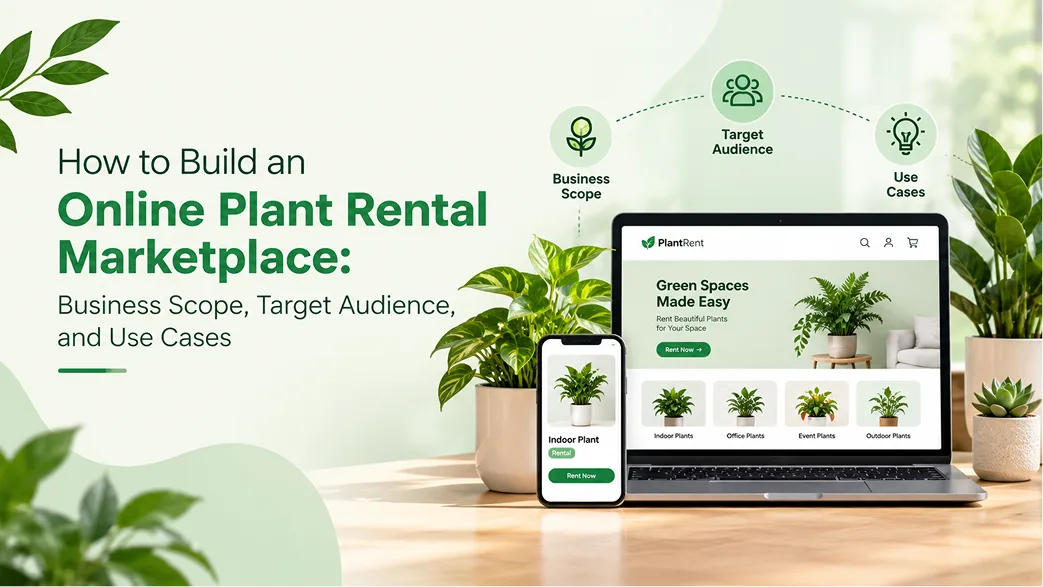
How to Build an Online Plant Rental Marketplace: Business Scope, Target Audience, and Use Cases
Construction and infrastructure projects often require specialised machinery and heavy equipment for a limited period. Purchasing every machine needed for a project can involve significant investment, storage requirements, transportation arrangements, and ongoing maintenance expenses. As a result, many contractors and businesses prefer renting equipment based on their project requirements.
This creates an opportunity for online plant rental marketplaces. These platforms connect equipment owners and rental companies with businesses looking for machinery, helping both sides discover rental opportunities through a centralised digital system.
However, building a successful plant rental marketplace requires more than displaying equipment listings. The platform must support supplier onboarding, equipment discovery, rental enquiries, availability management, pricing, booking coordination, payments, and customer communication.
Before starting development, it is important to understand the business scope, target audience, revenue opportunities, and practical use cases. These factors help define the right marketplace model and development priorities.
What Is an Online Plant Rental Marketplace?
An online plant rental marketplace is a digital platform that connects businesses or individuals who need construction and industrial equipment with equipment owners and rental providers.
In this context, the term plant refers to machinery and equipment used in construction, infrastructure, industrial operations, agriculture, and related industries.
Examples of equipment available through a plant rental marketplace include:
- Earthmoving equipment: Excavators, bulldozers, backhoe loaders, wheel loaders, and graders.
- Lifting equipment: Mobile cranes, tower cranes, forklifts, and material handling machinery.
- Road construction equipment: Asphalt pavers, road rollers, compactors, and milling machines.
- Power generation equipment: Diesel generators, industrial generators, and power distribution equipment.
- Concrete equipment: Concrete mixers, batching plants, pumps, and concrete placing equipment.
- Access equipment: Scissor lifts, boom lifts, scaffolding, and elevated work platforms.
- Industrial equipment: Compressors, welding machines, pumps, and specialised production equipment.
The marketplace allows equipment providers to present their available assets while customers can search for suitable machinery based on their project needs, location, rental duration, and budget.
Why Is There a Business Opportunity in Plant Rental?
Construction and industrial projects often have changing equipment requirements. A contractor may need an excavator for one phase of a project, a crane for another, and a generator for temporary power supply.
Owning every required machine may not be practical, particularly for businesses handling multiple projects with different equipment requirements.
An online marketplace can address several operational challenges.
1. Easier Equipment Discovery
Customers may otherwise need to contact several rental companies to identify suitable machinery. A marketplace brings multiple suppliers and equipment categories together, making it easier to discover available rental options.
2. Better Supplier Visibility
Equipment owners can reach customers beyond their existing business networks. A digital listing provides an additional channel for promoting machinery, rental rates, specifications, and availability.
3. More Efficient Rental Enquiries
Instead of relying entirely on phone calls and manual enquiries, customers can submit equipment requirements through the platform. Suppliers can review requests and respond with availability and pricing.
4. Support for Different Project Requirements
Some customers need equipment for a few hours, while others require machinery for several months. A marketplace can support different rental durations and help customers find providers that match their project timelines.
5. Opportunities for Regional Expansion
Equipment rental demand is often connected to project locations. A marketplace can expand into new cities or regions by onboarding suppliers in those areas and making their equipment discoverable to nearby customers.
Understanding the Business Scope of a Plant Rental Marketplace
The business scope defines what the marketplace will offer, which users it will serve, and how rental transactions will be managed. A clearly defined scope helps avoid unnecessary features and creates a practical development roadmap.
1. Equipment Listing and Supplier Management
The platform should allow approved suppliers to create and manage equipment listings. Each listing should contain the information customers need to evaluate machinery before submitting a rental enquiry.
Typical listing information includes:
- Equipment name and category
- Brand, model, and manufacturing year
- Technical specifications and capacity
- Equipment photographs and videos
- Rental rates and minimum rental period
- Equipment location
- Availability status
- Operator availability, if offered
- Delivery and transportation options
For individually tracked machinery, unique asset records can help suppliers manage each unit separately rather than treating all equipment as interchangeable inventory.
2. Customer Registration and Business Profiles
Customers may include construction companies, contractors, infrastructure developers, project managers, and industrial businesses.
The platform can support individual and business accounts. Business profiles may contain company details, contact information, billing information, project locations, and relevant verification documents.
3. Equipment Search and Discovery
Customers should be able to find suitable machinery without browsing unrelated listings. Search and filtering can be organised around:
- Equipment category and type
- Brand and model
- Equipment specifications and capacity
- Rental price and duration
- Supplier location
- Delivery availability
- Operator availability
- Supplier ratings and reviews
Location-based discovery is particularly useful because transportation costs and delivery distance can influence the total rental expense.
4. Rental Enquiry and Booking Management
Not every equipment rental can follow a standard instant-booking process. Heavy machinery may require quotation discussions, site information, delivery arrangements, and confirmation of operator availability.
The platform should therefore support both direct bookings and enquiry-based rental requests.
A typical booking workflow may include:
- The customer selects the required equipment.
- The customer enters the project location and rental period.
- The platform checks the available equipment information.
- The customer submits a booking or quotation request.
- The supplier reviews the request and provides pricing.
- The customer accepts the quotation and completes the required payment.
- The supplier confirms dispatch or delivery arrangements.
- The equipment is returned and the rental order is closed.
5. Rental Pricing and Quotation Management
Plant rental pricing can vary depending on the machine, rental duration, operating hours, project location, transportation, and additional services.
The marketplace may support:
- Hourly, daily, weekly, and monthly rental rates
- Minimum rental duration
- Additional operating-hour charges
- Transportation and delivery fees
- Operator or technician charges
- Security deposits
- Custom quotations for long-term projects
For complex equipment rentals, the supplier should be able to create a customised quotation instead of relying entirely on a fixed listing price.
6. Supplier Verification and Trust Management
Customers need confidence that the equipment provider is legitimate and that the listed machinery is suitable for the intended work.
Depending on the marketplace's operating model, supplier verification may include:
- Business registration details
- Identity and contact verification
- Equipment ownership or authorisation documents
- Insurance and relevant compliance documents
- Equipment photographs and specifications
- Customer feedback and dispute history
Verification requirements should be defined according to the equipment categories, local regulations, and responsibilities of the marketplace operator.
Who Is the Target Audience for a Plant Rental Marketplace?
Identifying the target audience is important because different customer groups have different equipment needs, booking processes, and purchasing decisions.
1. Construction Companies
Construction companies require machinery for activities such as excavation, material movement, concrete work, road construction, and site preparation.
A marketplace can help them discover equipment providers based on project location, specifications, and rental duration.
2. Infrastructure Developers
Infrastructure projects such as highways, bridges, airports, and industrial facilities may require specialised machinery across different project phases.
These customers may need bulk equipment enquiries, long-term rental agreements, and coordinated delivery arrangements.
3. Small and Medium-Sized Contractors
Smaller contractors may not have the financial resources or operational need to own every machine. Renting equipment allows them to access machinery for specific projects without making a large purchase commitment.
4. Equipment Rental Companies
Established rental businesses can use the marketplace as an additional channel to promote their equipment and receive enquiries. They may manage multiple assets, branches, rental rates, and customer requests through a supplier dashboard.
5. Independent Equipment Owners
Some businesses and individuals own machinery that is not used continuously. A marketplace can help them connect with potential renters, subject to supplier verification and the platform's operating rules.
6. Industrial and Manufacturing Businesses
Industrial facilities may require generators, compressors, pumps, forklifts, lifting machinery, and specialised equipment for temporary operations or maintenance projects.
7. Agricultural Businesses
Farmers and agricultural contractors may require tractors, harvesters, irrigation machinery, and other equipment during specific seasons or farming activities.
8. Government and Public Infrastructure Contractors
Companies working on public infrastructure projects may require machinery for road maintenance, drainage, public works, and other construction activities. Their procurement processes may involve formal quotations, vendor documentation, and approval workflows.
Real-World Use Cases of an Online Plant Rental Marketplace
Use Case 1: Renting an Excavator for a Construction Project
A contractor needs an excavator for a site preparation project lasting three weeks. Instead of contacting several equipment owners individually, the contractor searches the marketplace by location, machine capacity, and rental duration.
After comparing available suppliers, the contractor submits an enquiry. The supplier confirms availability, shares the quotation, and arranges delivery to the project site.
Platform value: Simplifies equipment discovery, quotation requests, and rental coordination.
Use Case 2: Renting a Crane for a Lifting Operation
An infrastructure company requires a crane for a specialised lifting operation. The company needs to consider lifting capacity, equipment specifications, site requirements, and operator availability.
The marketplace allows the customer to submit the project details and request quotations from suitable providers.
Platform value: Supports specialised enquiries and helps customers compare relevant equipment providers.
Use Case 3: Finding Equipment Near a Project Site
A construction team is working in a new location and needs a generator and concrete mixer. Transporting equipment from another city may increase project costs.
The team uses location-based search to discover suppliers operating near the project site.
Platform value: Improves local equipment discovery and helps customers consider transportation requirements.
Use Case 4: Managing Long-Term Equipment Rentals
A contractor needs multiple machines for a project expected to run for several months. The rental provider prepares a quotation covering rental duration, equipment quantities, delivery, and other applicable charges.
The platform records the agreed terms and helps both parties monitor the rental period and upcoming return dates.
Platform value: Supports long-term rental agreements and organised booking records.
Use Case 5: Equipment Owners Generating Additional Income
An equipment owner has machinery that is not required for an upcoming period. The owner lists the available asset on the marketplace with specifications, rental rates, and availability.
Customers searching for similar equipment can discover the listing and contact the owner through the platform.
Platform value: Creates an additional business channel for equipment owners.
Use Case 6: Managing Multiple Equipment Suppliers
A marketplace operator works with several rental companies across different regions. Each supplier manages its own equipment listings and booking requests, while the marketplace administrator monitors registrations, listing approvals, customer enquiries, and transactions.
Platform value: Centralises marketplace administration while allowing suppliers to manage their own operations.
Business Models for a Plant Rental Marketplace
The marketplace owner should decide how suppliers will participate and how the platform will earn revenue. Common business models include the following.
1. Commission-Based Marketplace
The platform earns a percentage or fixed commission from completed rental transactions. Commission rules can be configured according to equipment categories, suppliers, or transaction value.
2. Supplier Subscription Model
Equipment providers pay a recurring fee to access the marketplace. Different plans may offer different listing limits, promotional opportunities, or business tools.
3. Paid Listing Model
Suppliers pay to publish equipment listings or maintain a certain number of active listings. This model may be suitable for marketplaces that focus on supplier visibility and lead generation.
4. Featured Listing Model
Suppliers can pay to promote selected equipment in featured sections or sponsored search placements. Promotional listings should be clearly identified.
5. Lead Generation Model
The platform connects customers with relevant suppliers and charges suppliers for qualified enquiries or access to selected leads. The marketplace needs clear rules to define lead quality, distribution, and supplier access.
6. Hybrid Revenue Model
A marketplace can combine commissions, subscriptions, paid listings, and additional services. The best combination depends on supplier expectations, customer behaviour, and the competitive environment.
Single-Supplier vs Multi-Supplier Plant Rental Platform
Not every plant rental business needs a marketplace. The choice between a single-supplier platform and a multi-supplier marketplace should be based on the business objective.
Single-Supplier Platform
A single-supplier platform is operated by one equipment rental company. The company manages its own machinery, pricing, bookings, customer records, and rental operations.
This model is suitable for:
- Existing equipment rental companies
- Construction machinery owners
- Industrial equipment rental businesses
- Companies operating multiple rental branches
Multi-Supplier Marketplace
A multi-supplier marketplace allows multiple equipment owners and rental companies to register, publish listings, and receive customer enquiries through one platform.
This model is suitable for:
- Entrepreneurs planning a regional plant hire marketplace
- Businesses connecting equipment owners with contractors
- Companies expanding rental services across multiple cities
- Marketplace operators building a centralised equipment discovery platform
The multi-supplier model requires additional capabilities such as supplier verification, listing moderation, commission management, vendor settlements, and dispute handling.
Essential Modules for an Online Plant Rental Marketplace
Once the business model and target audience are clear, the platform's modules can be planned around the needs of each user group.
Customer Module
- Registration and business profile management
- Equipment search and category browsing
- Location-based equipment discovery
- Rental enquiries and booking requests
- Quotation review and approval
- Payments, invoices, and rental history
- Booking status and notifications
- Customer support and feedback
Supplier Module
- Supplier registration and verification
- Business and equipment profile management
- Equipment listing and specification management
- Rental pricing and availability updates
- Enquiry and quotation management
- Booking confirmation and rental tracking
- Customer communication
- Transaction and earnings reports
Admin Module
- Customer and supplier management
- Supplier verification and approval
- Equipment category and listing management
- Booking and enquiry monitoring
- Commission and subscription configuration
- Payment and settlement management
- Dispute and support management
- Reports and platform analytics
- Website content and configuration management
Additional Features to Consider as the Marketplace Grows
Equipment Availability Calendar
Suppliers should be able to manage equipment availability and update its status when machinery is booked, dispatched, returned, or sent for maintenance.
Rental Agreement Management
Digital agreements can record rental duration, payment terms, deposit conditions, responsibilities, delivery details, and return policies.
Delivery and Transportation Coordination
Large machinery often requires specialised transportation. The platform may support delivery requests, transport charges, dispatch scheduling, and delivery confirmation.
Equipment Inspection Records
Before dispatch and after return, suppliers may record equipment condition, photographs, operating-hour readings, and any damage or missing components.
Maintenance and Service Tracking
Maintenance schedules and repair records help equipment owners monitor asset condition and avoid offering unavailable machinery for new rentals.
GPS and Telematics Integration
Where compatible devices and services are available, GPS and telematics integrations can provide location and selected equipment usage information. The actual tracking capabilities depend on the machinery and connected hardware.
Mobile Applications
Customer and supplier mobile applications can make it easier to search for equipment, respond to enquiries, manage bookings, receive notifications, and update rental status while away from the office.
How to Plan the Development of a Plant Rental Marketplace
Step 1: Define the Target Market
Decide which industries, customer segments, equipment categories, and geographical regions the marketplace will serve. A focused initial market can make supplier onboarding and customer acquisition more manageable.
Step 2: Validate Supplier and Customer Demand
Speak with equipment owners, rental companies, contractors, and project managers. Understand how they currently find equipment, calculate rental charges, handle enquiries, and coordinate delivery.
Step 3: Select the Business and Revenue Model
Choose between a single-supplier platform and a multi-supplier marketplace. Define whether the business will earn through rental commissions, subscriptions, listings, qualified leads, or a combination.
Step 4: Prepare the Functional Scope
Document customer, supplier, and administrator workflows. Include the listing structure, booking process, quotation rules, payment responsibilities, and rental status transitions.
Step 5: Prioritise the MVP
Start with the modules needed to validate the marketplace. A practical first release may include supplier onboarding, equipment listings, search, enquiries, quotations, booking management, and an admin dashboard.
Step 6: Design the Platform Experience
Create responsive website layouts and clear dashboards for each user type. Pay particular attention to equipment specifications, location filters, quotation details, and booking status visibility.
Step 7: Develop and Integrate the Platform
Build the agreed modules and integrate suitable payment, map, notification, document, and communication services. Ensure that permissions and data access are controlled for each user role.
Step 8: Test Real Rental Scenarios
Test equipment availability, overlapping rental requests, quotation approval, booking changes, deposits, delivery coordination, return confirmation, and supplier settlements. Validate the system using realistic business scenarios.
Step 9: Launch and Expand Gradually
Begin with a selected group of suppliers and equipment categories. Monitor enquiries, booking conversions, supplier response times, and customer feedback. Expand into additional regions and equipment categories as the marketplace develops.
How Much Does It Cost to Build a Plant Rental Marketplace?
The development cost depends on the marketplace model, equipment categories, user roles, booking complexity, and integrations.
Important cost factors include:
- Marketplace structure: A single-supplier platform is generally different in scope from a multi-supplier marketplace.
- Equipment management: Detailed asset-level tracking requires more functionality than simple product listings.
- Booking and quotations: Custom pricing, long-term rentals, and approval workflows add complexity.
- Payment workflows: Deposits, refunds, commissions, and vendor settlements require additional financial logic.
- Applications: Responsive websites, supplier portals, admin panels, and mobile applications affect development effort.
- Integrations: Maps, GPS, accounting systems, notifications, and document services may involve additional development and recurring fees.
- Ongoing operations: Hosting, security updates, technical support, and future enhancements should be included in the project plan.
A detailed requirements document is the best starting point for obtaining a realistic development estimate. It allows the project to be divided into an initial launch scope and future enhancements.
Common Challenges to Consider Before Launch
Building a Reliable Supplier Network
A marketplace needs sufficient equipment availability to attract customers. Supplier onboarding, verification, listing quality, and clear commercial terms should be planned from the beginning.
Maintaining Accurate Equipment Availability
Equipment may be listed on multiple channels or used for internal projects. Suppliers need a reliable process to update availability and prevent conflicting rental commitments.
Managing Equipment Transportation
Large machinery may require special vehicles, loading arrangements, permits, and delivery coordination. The platform should clarify which party is responsible for these arrangements.
Handling Equipment Damage and Disputes
Rental agreements, inspection records, photographs, deposit rules, and documented communication can help address disputes relating to equipment condition and return responsibilities.
Maintaining Customer and Supplier Trust
Clear listing information, transparent pricing, verified suppliers, secure payments, and accessible support processes are important for building marketplace credibility.
Why Choose Custom Software Development for a Plant Rental Marketplace?
Every plant rental business has its own operational requirements. Some focus on simple equipment discovery and lead generation, while others require advanced booking workflows, supplier settlements, asset tracking, maintenance management, and multi-location operations.
A custom software solution can be planned around these specific requirements instead of forcing the business to follow workflows that do not match its operations.
It also allows the marketplace owner to introduce additional features gradually, integrate existing business systems, and expand the platform as supplier and customer demand increases.
Vriksha Tech works with businesses exploring custom web and mobile application development. If you are planning a plant rental marketplace, you can discuss your business model, user workflows, and technical requirements to identify a suitable development approach.
Conclusion
An online plant rental marketplace can create value by connecting equipment owners with businesses that need machinery for specific projects. It can simplify equipment discovery, organise rental enquiries, improve supplier visibility, and provide a centralised way to manage marketplace operations.
The success of the platform depends on more than its technology. A clear target market, reliable supplier network, practical revenue model, accurate equipment information, and transparent rental workflows are equally important.
Start by identifying the equipment categories and customers you want to serve. Define the core marketplace workflows, prioritise the essential features, and build a solution that can grow with your business.
If you are planning an online plant hire marketplace or a customised construction equipment rental platform, connect with Vriksha Tech to discuss your software development requirements.
Frequently Asked Questions
What is an online plant rental marketplace?
It is a digital platform that connects equipment owners and rental companies with customers looking to rent construction machinery, industrial equipment, and other heavy assets.
Who can use a plant rental marketplace?
Construction companies, contractors, infrastructure developers, industrial businesses, agricultural businesses, equipment rental companies, and independent equipment owners can use the platform.
What equipment can be listed on a plant rental marketplace?
Common categories include excavators, cranes, loaders, generators, road rollers, concrete equipment, forklifts, compressors, access platforms, and other construction or industrial machinery.
How does a plant rental marketplace make money?
Revenue models may include rental commissions, supplier subscriptions, paid equipment listings, featured promotions, lead generation fees, and additional services.
What is the difference between a plant rental website and a rental marketplace?
A rental website may represent one company managing its own equipment. A marketplace generally connects multiple independent suppliers with customers through a shared platform.
Can customers request custom quotations for machinery?
Yes. The platform can allow customers to submit project details, rental periods, equipment quantities, and delivery requirements. Suppliers can then respond with customised quotations.
Can the marketplace support multiple cities or regions?
Yes. Location-based equipment discovery, supplier service areas, and multi-location administration can help the marketplace operate across multiple regions.
Should the platform include mobile applications?
Mobile applications can be useful for customers and suppliers who need to manage enquiries, bookings, notifications, and equipment updates while working outside the office. They can be introduced during the initial development or a later phase.
What is the most important feature of a plant rental marketplace?
The most important capabilities are accurate equipment listings, supplier management, location-based discovery, availability management, and a reliable enquiry or booking workflow. The exact priorities depend on the marketplace model.
How long does it take to build an online plant rental marketplace?
The timeline depends on the number of modules, user roles, booking complexity, integrations, and application requirements. A focused MVP can be planned separately from a larger marketplace with advanced operational features.
Ready to Build Your Next Digital Product?
Our experts will respond within 24 hours with a tailored approach for your project.