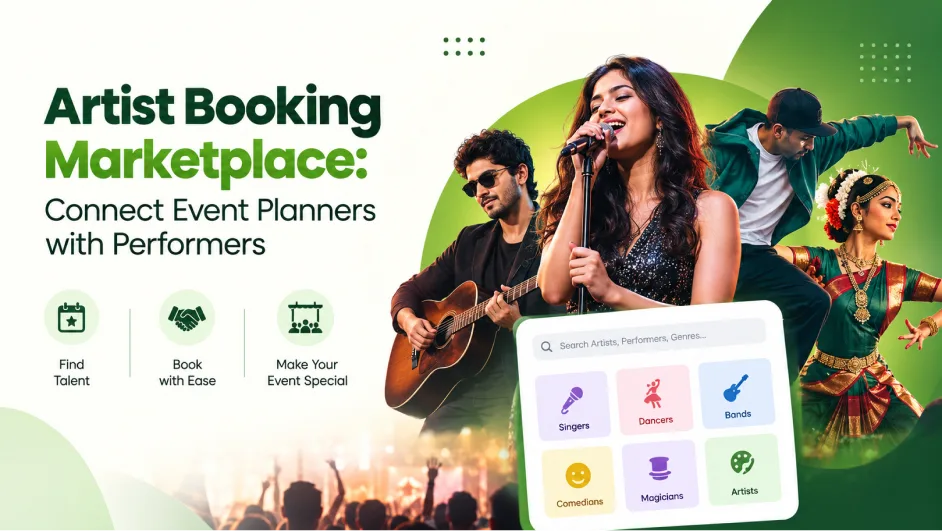
Artist Booking Marketplace: Connect Event Planners with Performers
Planning an event involves finding the right entertainment for the occasion. Whether it is a corporate gathering, birthday celebration, wedding, private party, or public performance, event organizers need an efficient way to discover performers, compare their work, discuss requirements, and request quotes.
At the same time, artists and entertainers need opportunities to showcase their talent, promote past performances, and connect with customers who are looking for their services.
An artist booking platform brings these two groups together through a centralized digital marketplace. Customers can explore artist profiles, publish event requirements, request quotes, and communicate with performers. Artists can create portfolios, discover gigs, respond to opportunities, and promote their profiles.
For businesses exploring the entertainment and events industry, this marketplace model offers a digital way to connect talent with event demand.
What Is an Artist Booking Marketplace?
An artist booking marketplace is an online platform where customers can discover, evaluate, and contact performers for events. Depending on the platform's categories, it may support musicians, singers, DJs, entertainers, and other performance artists.
Instead of searching across multiple websites and social media profiles, customers can explore artists and their work in one place. Artists can also find event opportunities posted by customers and submit proposals based on their availability, skills, and budget.
A typical marketplace includes four main user groups:
- Visitors: Browse public artist profiles, event opportunities, and website content.
- Customers and event organizers: Search for performers, request quotes, post gigs, and communicate with artists.
- Artists and performers: Build public profiles, showcase portfolios, respond to gig requests, and apply for opportunities.
- Administrators: Manage users, artist categories, gig listings, premium plans, content, and reported profiles or posts.
Essential Features of an Artist Booking Platform
1. Artist Search and Discovery
Customers need to find performers who match their event requirements. An artist booking website can provide search functionality for discovering artists and viewing their public profiles.
Search and discovery can be organized around relevant artist categories, locations, and other available criteria. Featured artist profiles can also be displayed prominently to improve their visibility.
A well-organized discovery experience helps customers move from a broad search to a shortlist of performers who fit their event.
2. Public Artist Profiles and Portfolios
An artist's profile is a central part of the booking journey. It gives performers a place to introduce themselves, share their work, and present their experience to potential customers.
A profile can include:
- Artist information and profile details
- Artist category and performance languages
- Images and other supported media
- Details of past and upcoming events
- Portfolio images and performance references
- Customer reviews and ratings, subject to moderation
Artists can publish text updates and supported media content to showcase their work. Customers can view this content and interact through likes or comments where those features are enabled.
3. Event Requirements and Gig Posting
Sometimes customers know what type of entertainment they need but have not selected a particular artist. A gig-posting feature allows them to describe the opportunity and invite interested performers to respond.
For example, an event organizer planning a corporate celebration could post a requirement for a live band in a specific city. Artists can browse available gigs, review the details, and submit applications with a personalized message and proposed budget.
This approach allows customers to receive responses from multiple artists rather than contacting every performer individually.
4. Quote Requests and Artist Invitations
Not every event can be arranged using a fixed price. Requirements may vary according to the event type, performance duration, location, and artist availability.
A quote request feature enables customers to contact artists about their requirements and invite suitable performers to work on a gig. Artists can respond to requests and provide the information needed for the customer to evaluate their proposals.
Customers can compare responses and choose an artist based on suitability. The platform should clearly explain how quote requests work and whether a submitted quote represents a confirmed booking or only a proposal.
5. Internal Messaging and Notifications
Clear communication is essential when arranging entertainment. An internal messaging system can allow customers and artists to discuss event requirements through the platform.
Notifications can inform users about relevant activity, such as:
- New messages
- Responses to posted gigs
- New quote or invitation requests
- Comments and interactions on content
- New gigs matching an artist's selected category or location
Email notifications can complement in-platform alerts, helping users stay informed about opportunities and conversations.
6. Customer Accounts, Favorites, and Social Sharing
Customer accounts can make it easier to manage artist discovery and event requirements. Customers can follow or unfollow artists, save performers to a favorites list, and revisit profiles they are interested in.
Other useful features include:
- Posting gigs and receiving responses from artists
- Requesting quotes and inviting artists
- Viewing artist portfolios and event information
- Sharing artist profiles through supported social channels
- Reporting inappropriate profiles or posts for administrative review
- Receiving notifications about relevant activity
These tools help customers organize their search and maintain communication with potential performers.
7. Artist Gig Applications and Opportunity Management
Artists need more than a public portfolio to find work. A dedicated gigs section can help them discover opportunities posted by customers.
Artists can browse available gigs, filter listings according to their preferred criteria, review event details, and apply with a personalized message and proposed budget. They can also respond to direct invitations and requests for quotes.
This creates a two-way marketplace: customers can search for performers, while performers can proactively discover and respond to event opportunities.
8. Reviews, Ratings, and Content Moderation
Reviews can help customers evaluate an artist's previous work and make more informed decisions. After working with an artist, customers can submit ratings and feedback associated with the gig.
To maintain quality, the platform can require administrator approval before reviews appear publicly. Users can also report profiles, posts, or pages that may need further review.
These moderation tools help administrators oversee user-generated content and support a more trustworthy marketplace experience.
9. Premium Artist Profiles and Featured Gigs
A marketplace can generate revenue by offering paid promotional placements. Artists may purchase premium plans to give their profiles greater visibility, while customers can purchase featured placement for selected gig listings if the business model supports it.
Premium listings can appear above standard results or in designated featured areas. The marketplace should clearly distinguish paid placements from ordinary search results so users understand how listings are presented.
Pricing, subscription duration, listing limits, and renewal policies should be defined by the platform operator.
10. Centralized Administration
A web-based administration panel helps the marketplace owner manage users, content, listings, and platform settings.
Core administrative capabilities can include:
- Managing customer and artist accounts
- Managing artist categories and performance languages
- Managing artist public pages and event listings
- Reviewing and managing gig posts
- Managing premium listings and promotional plans
- Managing reported users, profiles, and posts
- Managing blog posts and CMS pages
- Managing locations such as states and cities
- Managing sub-administrators and their access
- Configuring metadata and general website settings
These controls help operators maintain consistent content, oversee user activity, and manage the marketplace as it grows.
How Does an Artist Booking Marketplace Work?
- Artists create profiles: Performers register and build public profiles with their information, portfolio content, and event references.
- Customers explore performers: Event organizers search artist profiles and review relevant work and available information.
- Customers share requirements: They request a quote from an artist or publish a gig describing the event opportunity.
- Artists respond: Suitable performers submit proposals, provide personalized messages, or respond to invitations.
- Both sides communicate: Customers and artists use the platform's messaging tools to discuss the requirements.
- The customer selects a performer: The customer evaluates responses and chooses the artist who best matches the event needs.
- The marketplace manages visibility: Administrators oversee listings, premium plans, reports, and content moderation.
The precise booking, payment, contract, and cancellation workflows should be defined according to the marketplace's business requirements.
Benefits of Building an Artist Booking Website
For Customers and Event Organizers
- Discover multiple performers through a centralized platform.
- Review portfolios and past or upcoming event information.
- Request quotes from artists for specific requirements.
- Post gigs and receive proposals from interested performers.
- Save favorite artists and communicate through platform messaging.
For Artists and Entertainers
- Build a public portfolio to showcase talent and experience.
- Discover event opportunities through gig listings.
- Apply for relevant gigs with a proposed budget.
- Respond to direct invitations and quote requests.
- Promote profiles through available premium listing plans.
For Marketplace Owners
- Connect performers with customers looking for event entertainment.
- Manage artist profiles, gig listings, and user activity centrally.
- Generate revenue through featured profiles and gig listings.
- Offer promotional options to artists and event organizers.
- Use content management and reporting tools to support operations.
Important Considerations Before Launching
Before developing an artist booking marketplace, businesses should define how the platform will operate and how it will support both customers and performers.
- Artist verification: Decide whether profiles require approval and what information performers must provide.
- Quote and booking process: Define how proposals are submitted, accepted, and converted into confirmed engagements.
- Payment handling: Establish whether the platform will process deposits, full payments, commissions, refunds, or artist payouts. These functions should not be assumed unless included in the agreed scope.
- Premium listing rules: Set clear prices, durations, renewal conditions, and visibility rules for paid placements.
- Content moderation: Establish procedures for reviewing reported content, customer reviews, and artist profiles.
- Communication: Determine which messaging and notification channels will be supported.
- SEO and mobile usability: Use descriptive URLs, relevant metadata, responsive layouts, and optimized media.
- Third-party services: Confirm the availability, cost, and configuration of social login, newsletter delivery, and any other required integrations.
Frequently Asked Questions
What is an artist booking platform?
An artist booking platform is an online marketplace where customers discover performers, request quotes, post event gigs, and communicate with artists through a centralized website.
Can customers receive quotes from multiple artists?
Yes. A gig marketplace can let customers publish event requirements and receive applications or proposals from multiple artists. Customers can also request quotes or invite selected performers directly.
How can artists find event opportunities?
Artists can browse gig listings, filter opportunities according to available criteria, and apply with a personalized message and proposed budget. They can also respond to direct invitations and quote requests.
How does an artist booking marketplace generate revenue?
One possible model is to sell premium artist profiles and featured gig listings. Paid placements can improve listing visibility and provide a revenue source for the marketplace owner.
Can artists showcase photos, videos, and past performances?
A platform can support public artist profiles, portfolio content, media posts, and information about past and upcoming events, subject to its supported content formats.
Does an artist marketplace automatically handle payments and contracts?
Not necessarily. Quote requests, messaging, and artist selection do not by themselves provide payment processing, contract management, or automated payouts. These capabilities must be planned and included in the implementation scope if required.
Build a Digital Marketplace for Event Entertainment
An artist booking marketplace creates a central place for customers to discover performers and for artists to find event opportunities. Public portfolios, gig listings, quote requests, internal messaging, premium placements, and administration tools provide the foundation for this type of digital business.
At Vriksha Tech, we help businesses explore and develop digital solutions aligned with their goals. If you are planning an artist booking website, entertainment marketplace, or gig platform, our team can help you evaluate the features, workflows, and integrations required for your project.
Frequently Asked Questions
What is an artist booking platform?
An artist booking platform is an online marketplace where customers discover performers, request quotes, post event gigs, and communicate with artists through a centralized website.
Can customers receive quotes from multiple artists?
Yes. A gig marketplace can let customers publish event requirements and receive applications or proposals from multiple artists. Customers can also request quotes or invite selected performers directly.
How can artists find event opportunities?
Artists can browse gig listings, filter opportunities according to available criteria, and apply with a personalized message and proposed budget. They can also respond to direct invitations and quote requests.
How does an artist booking marketplace generate revenue?
One possible model is to sell premium artist profiles and featured gig listings. Paid placements can improve listing visibility and provide a revenue source for the marketplace owner.
Can artists showcase photos, videos, and past performances?
A platform can support public artist profiles, portfolio content, media posts, and information about past and upcoming events, subject to its supported content formats.
Does an artist marketplace automatically handle payments and contracts?
Not necessarily. Quote requests, messaging, and artist selection do not by themselves provide payment processing, contract management, or automated payouts. These capabilities must be planned and included in the implementation scope if required.
Ready to Build Your Next Digital Product?
Our experts will respond within 24 hours with a tailored approach for your project.