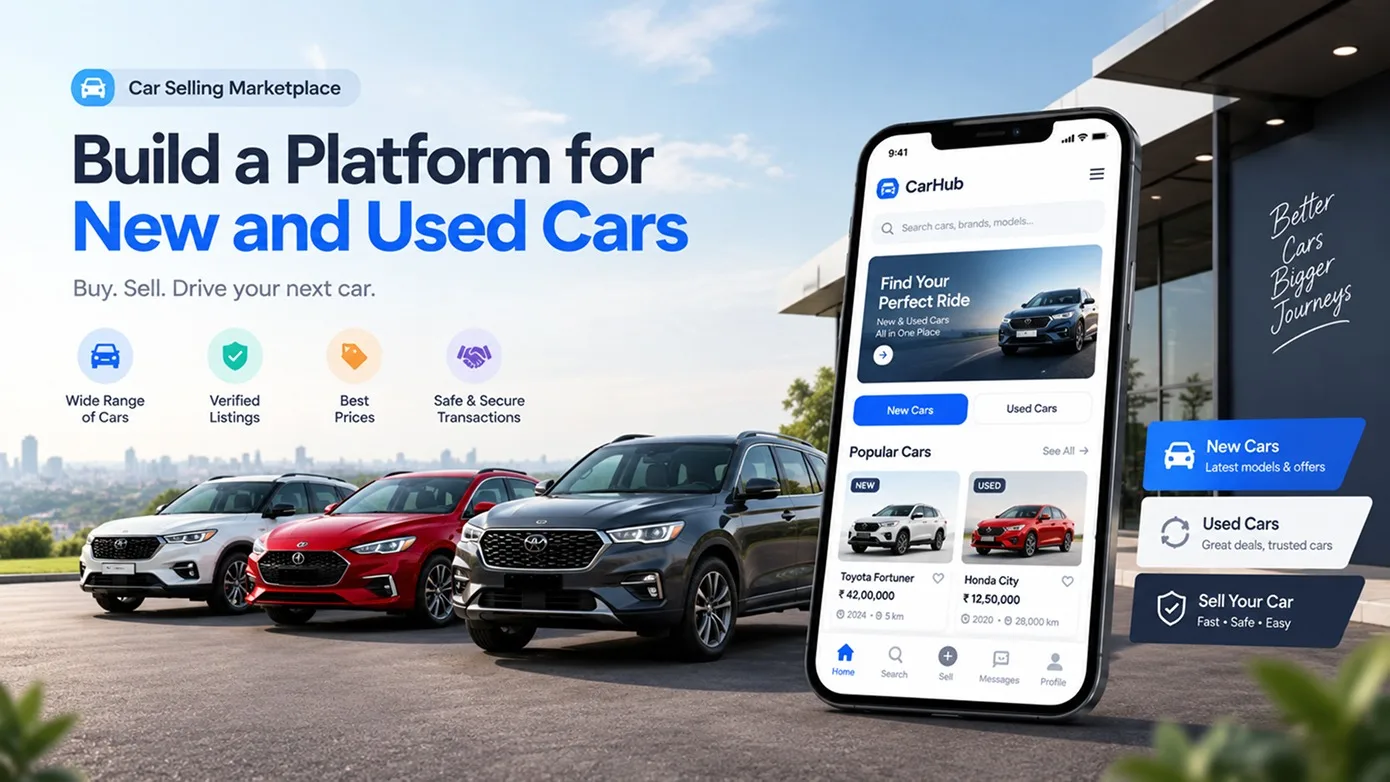
Car Selling Marketplace: Build a Platform for New and Used Cars
The way people research and buy cars continues to evolve. Buyers want to compare models, explore prices, review dealership offers, and understand vehicle features before making a decision. At the same time, individual sellers and car dealers need convenient ways to showcase their vehicles and connect with interested buyers.
An online car selling marketplace brings these activities together in one digital platform. It can support new car research, used car listings, dealership profiles, buyer enquiries, seller bidding, customer reviews, and vehicle comparisons.
For businesses planning to enter the automotive digital market, a well-structured car marketplace can provide a centralized place for buyers, sellers, dealers, and service centers to interact.
What Is a Car Selling Marketplace?
A car selling marketplace is an online platform where buyers can explore vehicles while individual sellers and dealerships publish listings and manage their marketplace activities.
Unlike a website that only displays a single dealership's inventory, a multi-seller marketplace can bring together listings and information from different sellers and dealers. Depending on its business model, it may also provide new car specifications, dealership offers, service-center information, and comparison tools.
A typical platform supports these user groups:
- Buyers: Search new and used cars, compare vehicles, save favorites, view dealer offers, and contact sellers.
- Individual sellers: Publish used car listings, upload images and descriptions, manage bids, and respond to interested buyers.
- Dealers: Manage dealership profiles, list vehicles, publish offers, handle enquiries, and manage reviews.
- Service centers: Publish service-center information and location details.
- Administrators: Manage users, vehicles, offers, subscriptions, transactions, reviews, and website content.
Essential Features of a Car Selling Marketplace
1. New Car Listings and Model Information
Buyers often begin their research by exploring available car models and understanding their specifications. A marketplace can provide dedicated pages for new cars, including images, videos, model details, variants, and their features.
Reviews and ratings for new cars can help users explore feedback alongside the available vehicle information. Upcoming car listings can also give visitors a place to discover models that have not yet entered the market.
Business benefit: Detailed vehicle information helps buyers research available models and narrow down their choices before contacting a dealer.
2. Used Car Listings
A used car module allows individual sellers to publish vehicles with images and descriptions. Buyers can explore the listings, read seller-provided details, and contact sellers to discuss a vehicle.
The platform can also support bids on used cars, comments, and messaging between sellers and interested buyers. Sellers can manage vehicle information, review bids, and track their bidding history.
Business benefit: A structured used car listing experience helps individual sellers showcase their vehicles and gives buyers a convenient way to discover available options.
3. Advanced Vehicle Search
Search functionality helps buyers narrow down the available listings according to their preferences.
The feature list identifies different search criteria for different modules:
- New cars: Make, model, and price range.
- Used cars: Make, model, year, and city.
- Dealers: Make and city.
- Service centers: Make and city.
- Dealer offers: Make and city.
Separating search options by listing type makes the discovery process more relevant to the buyer's needs.
Business benefit: Useful search filters reduce unnecessary browsing and help users find relevant vehicles, dealers, and services.
4. Dealer Store Profiles
A car marketplace can allow dealers to create dealership profiles with store images and descriptions. Dealers can manage their store pages, list vehicles available through their dealerships, and respond to messages from interested buyers.
The platform can also support multiple dealership stores for a dealer through the purchase of additional subscription plans. Dealers may manage new car offers, used car listings, service-center details, and reviews through their accounts.
Business benefit: Dedicated dealer profiles give automotive businesses a structured presence and a place to manage their listings and customer enquiries.
5. Dealer Offers and Variant Price Comparisons
Buyers may want to compare offers from different dealers before choosing a vehicle. A marketplace can display special offers and allow users to explore pricing from multiple dealers for a particular car model or variant.
Offer search can be organized by make and city, helping visitors find relevant dealer promotions in their selected location.
Business benefit: Comparing dealer offers and variant prices helps buyers evaluate available options and encourages dealers to present their offers clearly.
6. Car Comparison Tools
When buyers shortlist multiple vehicles, a comparison feature can help them evaluate their options side by side.
Combined with model information, variant details, and vehicle features, comparison functionality gives buyers a more organized way to research cars before contacting a seller or dealer.
Business benefit: Vehicle comparison supports informed research and can make the marketplace more useful throughout the buyer's decision-making process.
7. Buyer and Seller Messaging
Communication is an important part of buying a vehicle online. The platform can allow interested buyers and sellers to exchange messages and share relevant details about a listed car.
Sellers can view messages from interested buyers, manage bids, and access bidding history. Buyers can also save cars for later review and update their account details.
Business benefit: Integrated communication helps users move from browsing a listing to discussing the vehicle with the relevant seller.
8. Saved Cars, Reviews, and Ratings
Buyers may want to revisit vehicles or dealerships while researching their options. A saved-cars feature allows them to keep selected vehicles in a list for easier access later.
The platform can also support reviews and ratings for new cars and dealership stores. Review moderation controls allow administrators to configure whether submissions require approval before becoming publicly visible. Dealers can flag reviews they consider inappropriate for administrative review.
Business benefit: Saved listings support repeat visits, while reviews and ratings provide additional information for users evaluating cars and dealerships.
9. Service Center Listings
Automotive service centers can have their own listings on the marketplace, including store details and location information displayed on a map.
Buyers can search for service centers by car make and city. Dealers may also manage their associated service-center details where supported by their account configuration.
Business benefit: Service-center listings extend the platform beyond vehicle discovery and provide another useful resource for automotive customers.
10. Dealer Subscription Plans
A subscription model can allow dealers and sellers to access selected marketplace services through defined plans. The platform can support multiple dealership stores through additional plans.
Subscription management can include payment options, transaction history, and order-notification emails. The feature list identifies PayPal and wire transfer as supported payment options for subscription-related transactions.
Businesses should define the plan benefits, pricing, renewal conditions, and store limits clearly before launch.
Business benefit: Subscription plans can create recurring revenue opportunities and provide a structured way to manage dealer participation.
How a Car Selling Marketplace Works
A typical marketplace journey can be organized into the following steps:
- Explore vehicles: Buyers search new and used car listings using available filters.
- Review details: Buyers inspect vehicle images, descriptions, specifications, variants, and available dealer offers.
- Compare options: Buyers compare selected models, review relevant dealership information, or save cars for later.
- Contact the seller or dealer: Interested buyers send messages to discuss a listing and request additional information.
- Manage the listing: Individual sellers manage used car details and bids, while dealers maintain their store profiles, vehicles, and offers.
- Review feedback: Users can explore available reviews and ratings, subject to the platform's moderation settings.
- Manage the marketplace: Administrators oversee users, listings, subscriptions, transactions, reviews, and content.
The exact purchasing and transaction process depends on the business model. The listed features support vehicle discovery and buyer-seller communication, but they do not establish that the entire vehicle sale, ownership transfer, or delivery process is automated.
Business Models for a Car Marketplace
A car selling marketplace can generate revenue through several approaches. The feature list specifically identifies subscription plans for dealers and sellers, with additional dealership stores available through multiple plans.
1. Dealer and Seller Subscriptions
The platform can offer different subscription plans based on the access or listing capabilities provided to each account type. Dealers who want to manage multiple dealership stores can purchase additional plans.
Plan structure and pricing should reflect the target market, dealer requirements, and operating costs.
2. Additional Dealer Store Plans
Dealers can purchase multiple plans to list more than one dealership store. This provides a way to support automotive businesses operating across different locations or store identities.
The platform owner should clearly explain the relationship between subscription plans and the number of stores a dealer can manage.
Benefits of Developing a Car Selling Marketplace
A Centralized Vehicle Discovery Platform
Buyers can explore new and used cars, compare models, review offers, and find dealers from one website rather than navigating multiple disconnected sources.
More Visibility for Sellers and Dealers
Individual sellers can publish vehicle listings, while dealerships can manage store profiles and display vehicles and offers to interested buyers.
Better Buyer Research
Search filters, vehicle specifications, comparison tools, saved cars, and reviews help buyers organize their research before making a decision.
Organized Enquiry Management
Messaging and bid-management features give sellers and dealers tools to respond to interested buyers and manage their marketplace activity.
Potential for Recurring Revenue
Subscription plans provide a defined way to charge participating dealers and sellers for eligible marketplace access or listing capabilities.
Centralized Administrative Control
Administrative features help manage users, vehicle data, dealer offers, transactions, review moderation, reports, and website content from one place.
Important Considerations Before Launching
Building a car marketplace requires careful planning around vehicle information, dealer participation, buyer enquiries, and marketplace operations.
- Define your audience: Decide whether the platform will focus on used cars, new car research, dealership listings, or a combination of these areas.
- Structure vehicle data: Organize makes, models, variants, vehicle details, images, and prices consistently.
- Plan seller and dealer workflows: Establish how users register, publish listings, manage bids, respond to enquiries, and maintain dealership pages.
- Set subscription rules: Define plan benefits, pricing, payment methods, and the number of dealership stores supported by each plan.
- Moderate reviews and listings: Establish clear procedures for review approval, inappropriate content reports, and listing management.
- Make search useful: Select filters that match the information available for each vehicle type and user group.
- Plan for SEO: Use descriptive listing pages, appropriate metadata, optimized images, breadcrumbs, and a dynamic sitemap.
- Consider mobile users: Ensure buyers and sellers can search listings, view vehicle details, and communicate comfortably from smartphones.
- Plan for scale: Consider hosting, data management, backups, and operational support as the number of users and listings increases.
Features such as vehicle inspection reports, financing approval, insurance quotations, ownership-transfer services, verified vehicle histories, and integrated test-drive booking should be treated as separate requirements unless they are explicitly included in the development scope.
Build Your Car Marketplace with Vriksha Tech
A successful car selling marketplace needs more than vehicle listings. It requires a smooth discovery experience, useful comparison tools, well-organized dealer profiles, effective enquiry management, and administrative controls that support day-to-day operations.
Vriksha Tech helps businesses plan and develop digital solutions around their operational goals. Whether you are building a used car marketplace, a multi-dealer listing website, or a broader automotive platform, a clear feature plan can help you shape the right solution for your target audience.
Planning your own automotive marketplace? Let's discuss your requirements and explore a suitable digital solution.
Frequently Asked Questions
What is a car selling marketplace?
A car selling marketplace is an online platform where buyers can research vehicles while individual sellers and dealers publish listings, manage their profiles, and communicate with interested buyers.
Can a car marketplace support both new and used cars?
Yes. A platform can include separate modules for new and used cars, with different listing details and search criteria for each type.
How can buyers compare cars on the platform?
Buyers can use car comparison features alongside model specifications, variant details, price information, dealer offers, and available reviews to evaluate their options.
Can individual sellers receive bids for used cars?
Yes. A marketplace with used car bidding can allow sellers to manage bids, review bidding history, and communicate with interested buyers through messaging features.
How can a car marketplace generate revenue?
One option is to offer subscription plans for dealers and sellers. Additional plans can support dealers who want to manage multiple dealership stores. Other revenue models would need to be defined according to the business requirements.
Can dealers manage their own dealership profiles?
Yes. Dealer features can include store images and descriptions, vehicle listings, offers, service-center details, buyer messages, and review management.
Does a car marketplace need an admin panel?
An admin panel helps manage users, vehicles, upcoming cars, offers, transactions, orders, reviews, locations, reports, and website content. It also provides controls for administrative permissions and platform settings.
Ready to Build Your Next Digital Product?
Our experts will respond within 24 hours with a tailored approach for your project.