 Sep 30, 2026
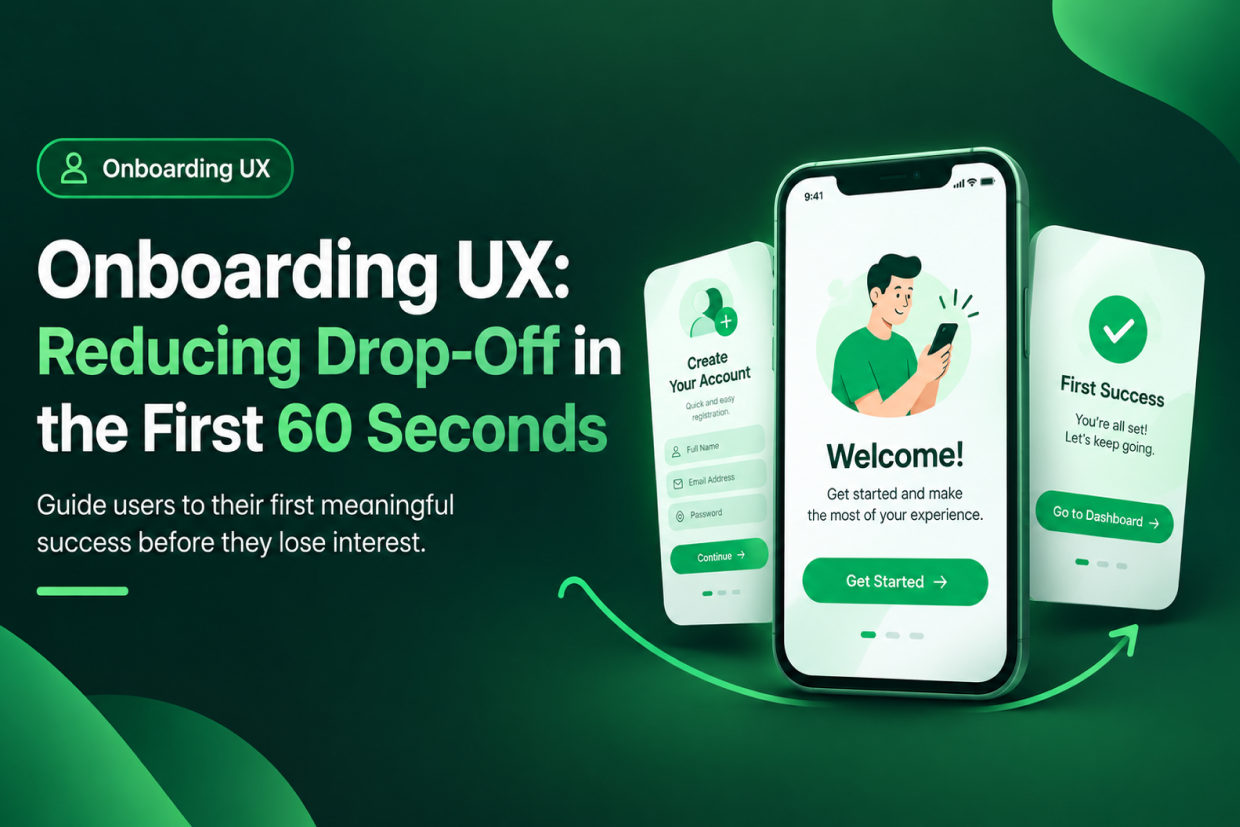
Onboarding UX: Reducing Drop-Off in the First 60 Seconds
Most user drop-off happens during the first moments of a new experience. Effective onboarding should help users reach their first meaningful success quickly instead of overwhelming them with instructions, account requirements, and unnecessary steps. This article explains how thoughtful onboarding UX can create a stronger first impression and reduce early abandonment.
- Sep 19, 2026
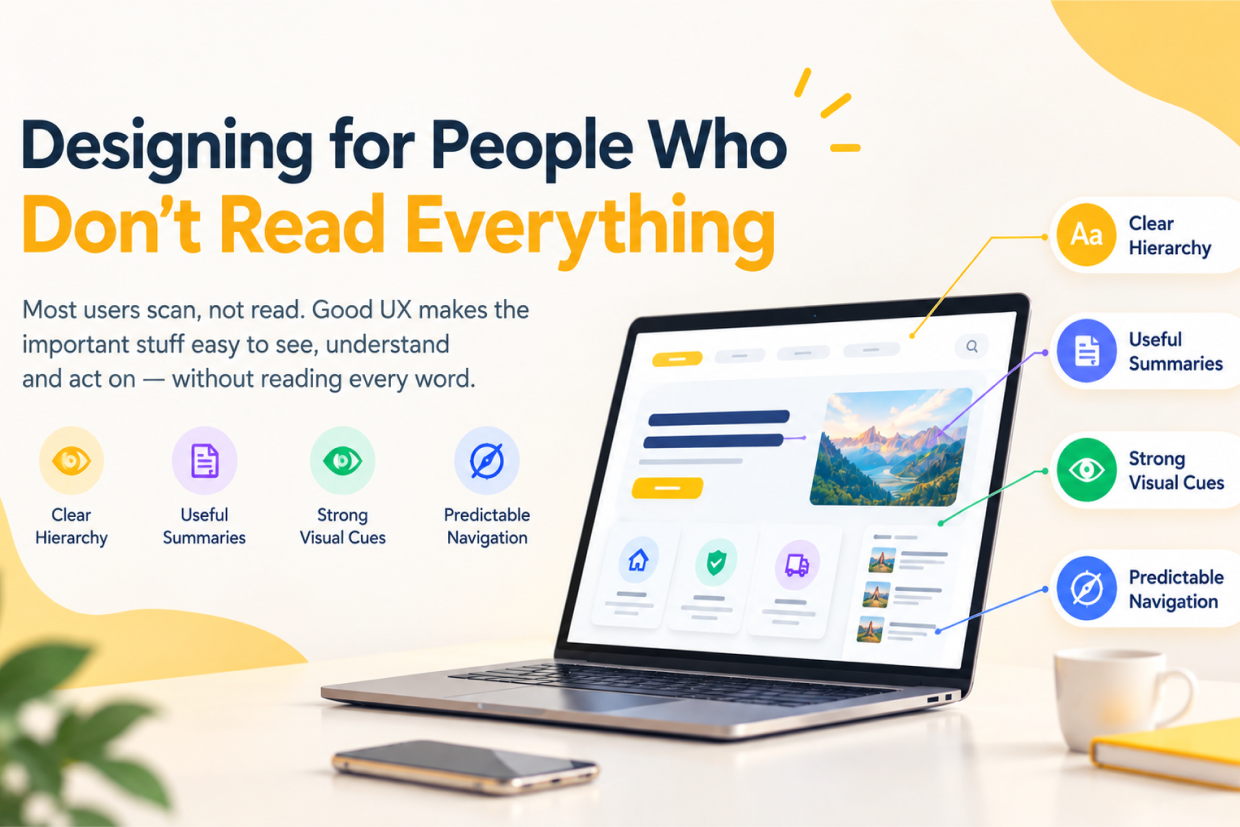
Designing for People Who Don't Read Everything
Most users do not read every word on a website or inside an application. They scan headings, look for familiar patterns, notice highlighted information, and decide within seconds whether something deserves their attention. This does not mean users are careless. It means digital interfaces compete with limited attention. Good UX design takes this behavior into account by creating clear hierarchy, useful summaries, strong visual cues, and predictable navigation so people can understand important information without reading every sentence.
- Sep 15, 2026
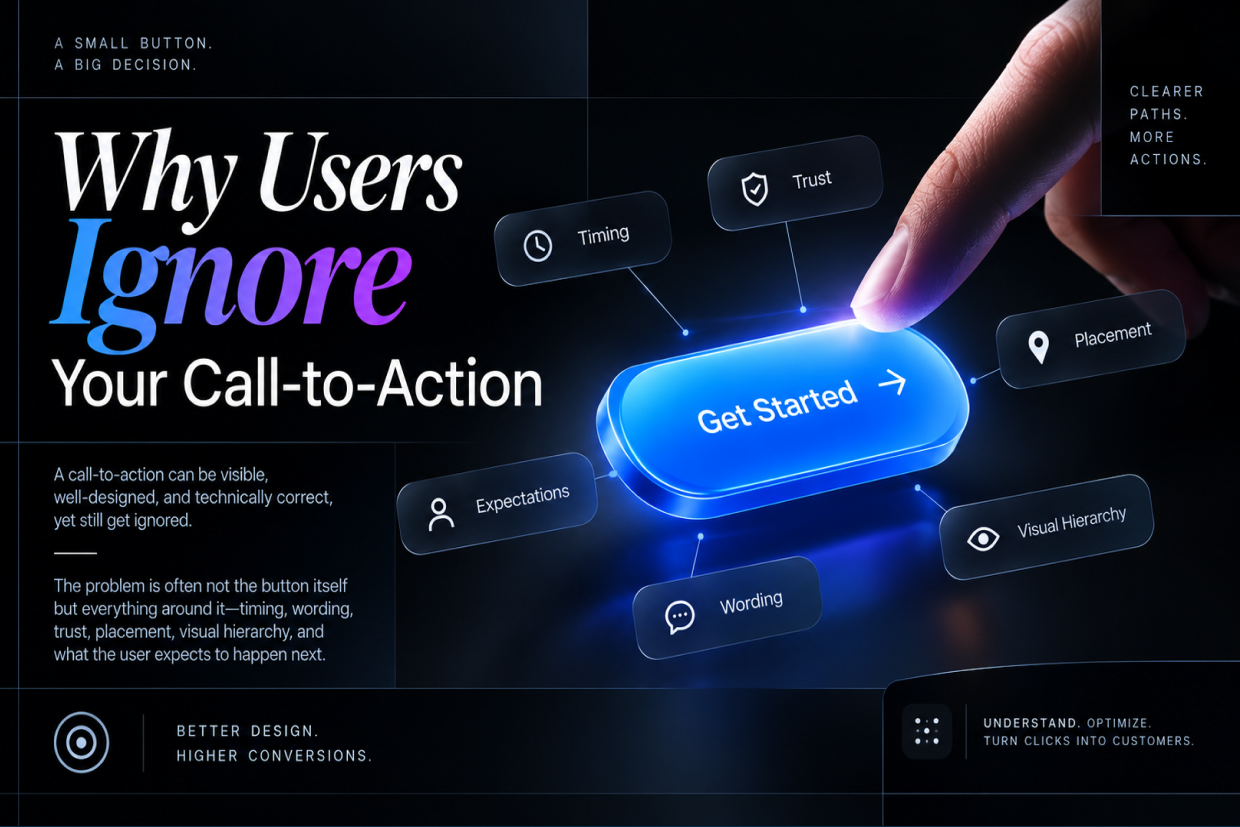
Why Users Ignore Your Call-to-Action
A call-to-action can be visible, well-designed, and technically correct, yet still get ignored. The problem is often not the button itself but everything around it—timing, wording, trust, placement, visual hierarchy, and what the user expects to happen next. This article explores why users ignore CTAs and how businesses can design clearer paths toward action.
- Aug 30, 2026
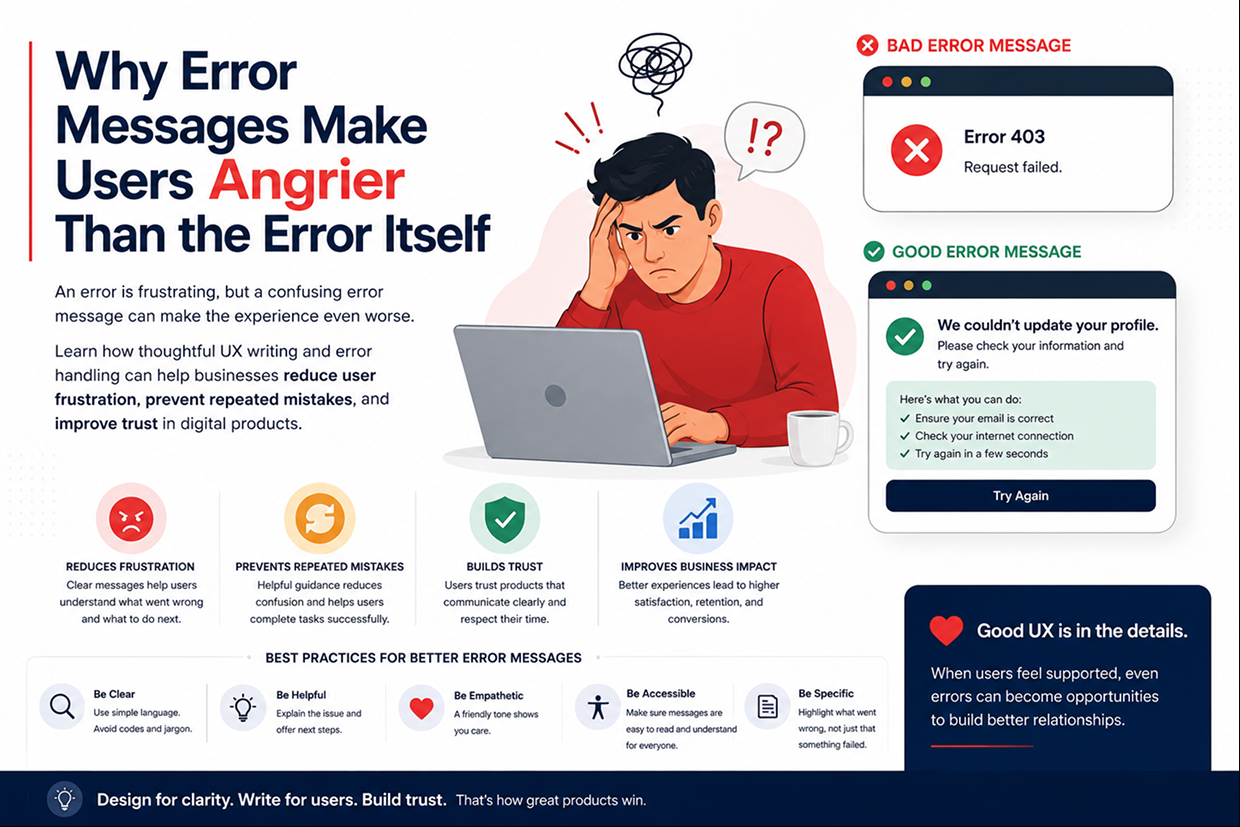
Why Error Messages Make Users Angrier Than the Error Itself
An error is frustrating, but a confusing error message can make the experience even worse. Learn how thoughtful UX writing and error handling can help businesses reduce user frustration, prevent repeated mistakes, and improve trust in digital products.
- Aug 14, 2026
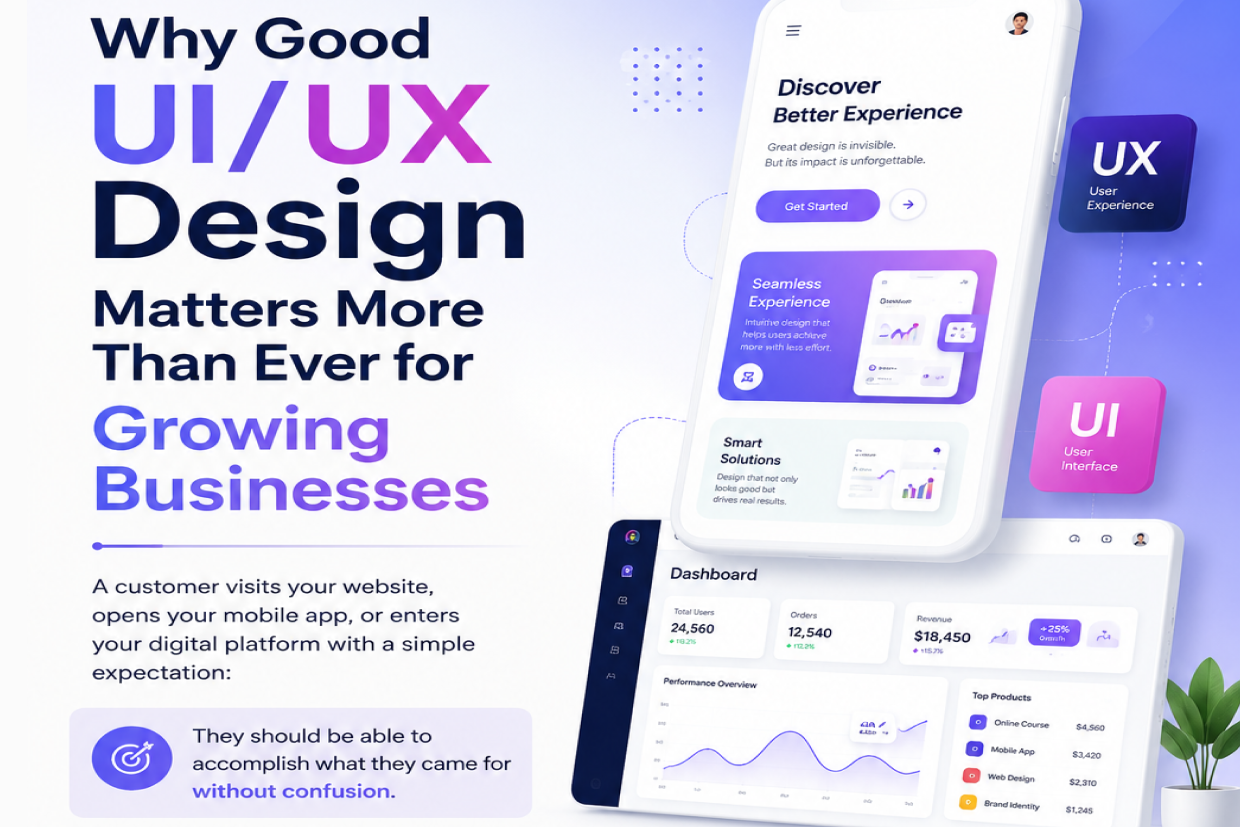
Why Good UI/UX Design Matters More Than Ever for Growing Businesses
why-good-ui-ux-design-matters-for-businesses

- Aug 1, 2026
Modern UI/UX Design Trends Every Business Should Know
Today's users expect fast, intelligent, and seamless digital experiences. Discover the latest UI/UX design trends helping businesses improve customer engagement, retention, and conversions.