How Blockchain Can Reduce Fraud and Delays in Insurance Claims
Short answer: Insurance claims involve many unconnected parties and documents, which slows verification and leaves room for fraud. Blockchain can help detect suspicious claims, automate repetitive steps with smart contracts, improve document verification and build trust between organizations, while working alongside existing insurance software.
Insurance claims often involve multiple parties and large amounts of documentation. A single claim may require customer information, policy details, invoices, inspection reports, medical records, repair estimates, and approval from different teams.
When this information is stored across separate systems, verifying a claim can become slow and complicated. Different parties may have different versions of the same information, while manual verification increases the possibility of errors and fraudulent claims.
Blockchain can provide a shared and tamper-resistant record where important claim events can be securely recorded and verified. Instead of relying entirely on separate databases and manual reconciliation, authorized participants can work with a trusted record of what happened and when.
This makes blockchain particularly useful for insurance businesses looking to improve fraud detection, claim transparency, document verification, and settlement efficiency.
The Real Problem: Insurance Claims Involve Too Many Unconnected Parties
Consider a vehicle accident claim.
The customer reports the accident. An insurance agent reviews the policy. A surveyor inspects the vehicle. A garage provides an estimate. The insurer validates the documents and finally processes the settlement.
If every participant maintains separate records, the insurer may need to repeatedly verify the same information.
| Traditional Claim Process | Blockchain-Enabled Process |
|---|---|
| Information stored across different systems | Verified claim events recorded on a shared ledger |
| Manual document verification | Digital verification of records |
| Multiple versions of claim information | Consistent transaction history |
| High dependency on manual reconciliation | Automated validation between participants |
| Fraud discovered during later investigation | Suspicious inconsistencies can be identified earlier |
Blockchain does not automatically make a claim legitimate. Instead, it creates a stronger foundation for verifying information and tracking changes across the claim lifecycle.
How Blockchain Helps Detect Suspicious Claims
Insurance fraud can take many forms. A customer may submit duplicate claims, altered documents may be provided, or the same incident may be reported through multiple channels.
A blockchain-based claims system can record important events such as:
- Policy creation and updates
- Claim submission
- Inspection completion
- Document verification
- Repair or treatment records
- Claim approvals
- Settlement transactions
Because blockchain records are designed to be tamper-resistant, organizations can establish a more reliable history of claim activity.
For example, if the same vehicle damage is submitted through multiple claims, connected systems can compare relevant records and flag the situation for further investigation.
Smart Contracts Can Automate Repetitive Claim Processes
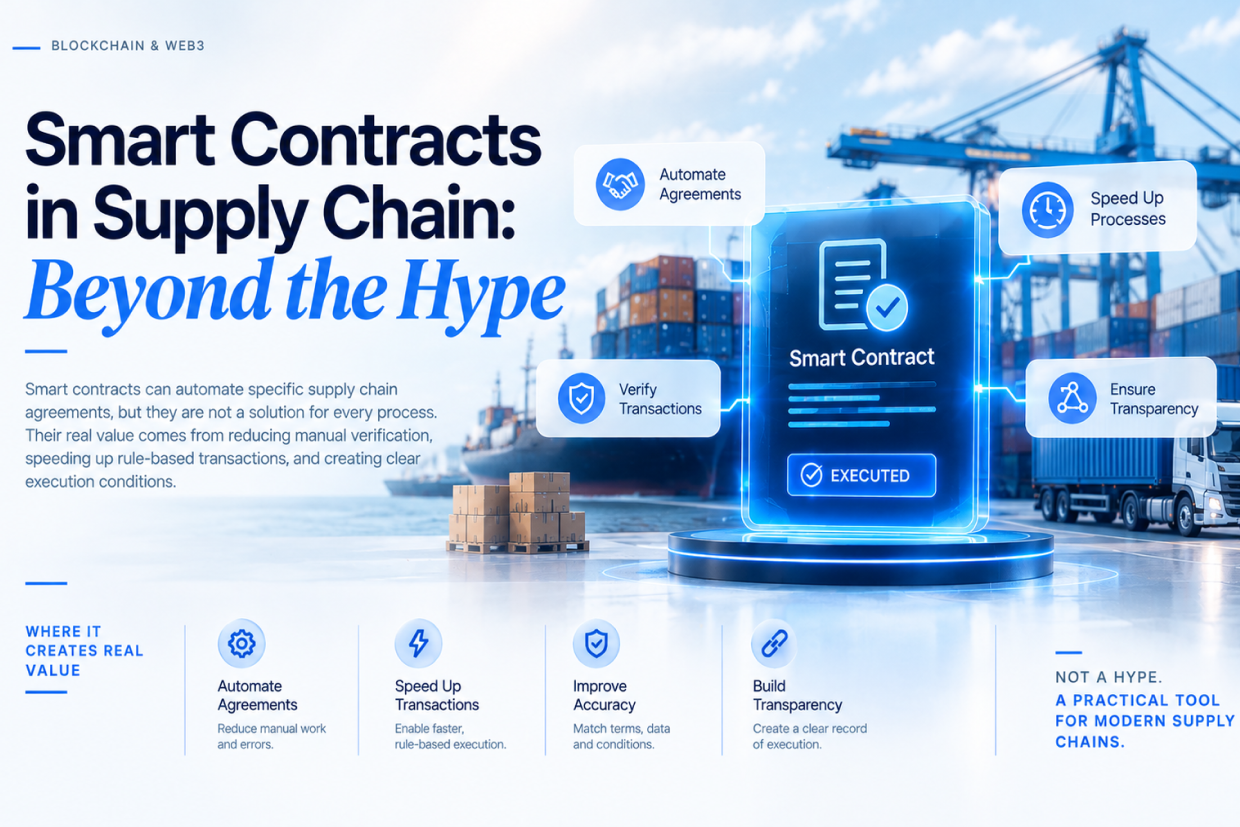
Another important application is smart contract automation.
Instead of requiring employees to manually verify every step of a straightforward claim, predefined business rules can automatically trigger actions when required conditions are satisfied.
For example:
Claim Submitted → Policy Verified → Documents Validated → Inspection Approved → Settlement Triggered
This can reduce unnecessary manual intervention for claims that meet predefined conditions.
Smart contracts can also help ensure that the same business rules are applied consistently across eligible claims.
Blockchain Can Improve Document Verification
Insurance organizations deal with large volumes of documents, including invoices, certificates, inspection reports, medical records, and repair estimates.
One challenge is determining whether a document has been modified after submission.
A blockchain solution can store a cryptographic fingerprint of important documents rather than placing the complete sensitive document on-chain.
When verification is required, the system can compare the document's current fingerprint with the recorded value.
| Business Challenge | Blockchain-Based Approach |
|---|---|
| Modified documents | Verify document integrity |
| Duplicate claims | Compare historical claim records |
| Disputed claim timelines | Maintain a verifiable event history |
| Manual approvals | Automate predefined workflows |
| Multiple stakeholders | Share trusted records with authorized participants |
This approach can provide an additional verification layer without requiring sensitive business information to be publicly exposed.
Where Blockchain Can Be Used in Insurance
Blockchain applications are not limited to vehicle insurance.
Health Insurance
Healthcare providers, insurers, and customers can use verified records to improve claim documentation and reduce repetitive verification.
Motor Insurance
Accident reports, vehicle inspections, repair estimates, and claim settlements can be connected through a traceable digital workflow.
Travel Insurance
Travel-related claims can involve flight cancellations, delays, lost baggage, and other external events. Verified event information can help insurers process eligible claims more efficiently.
Property Insurance
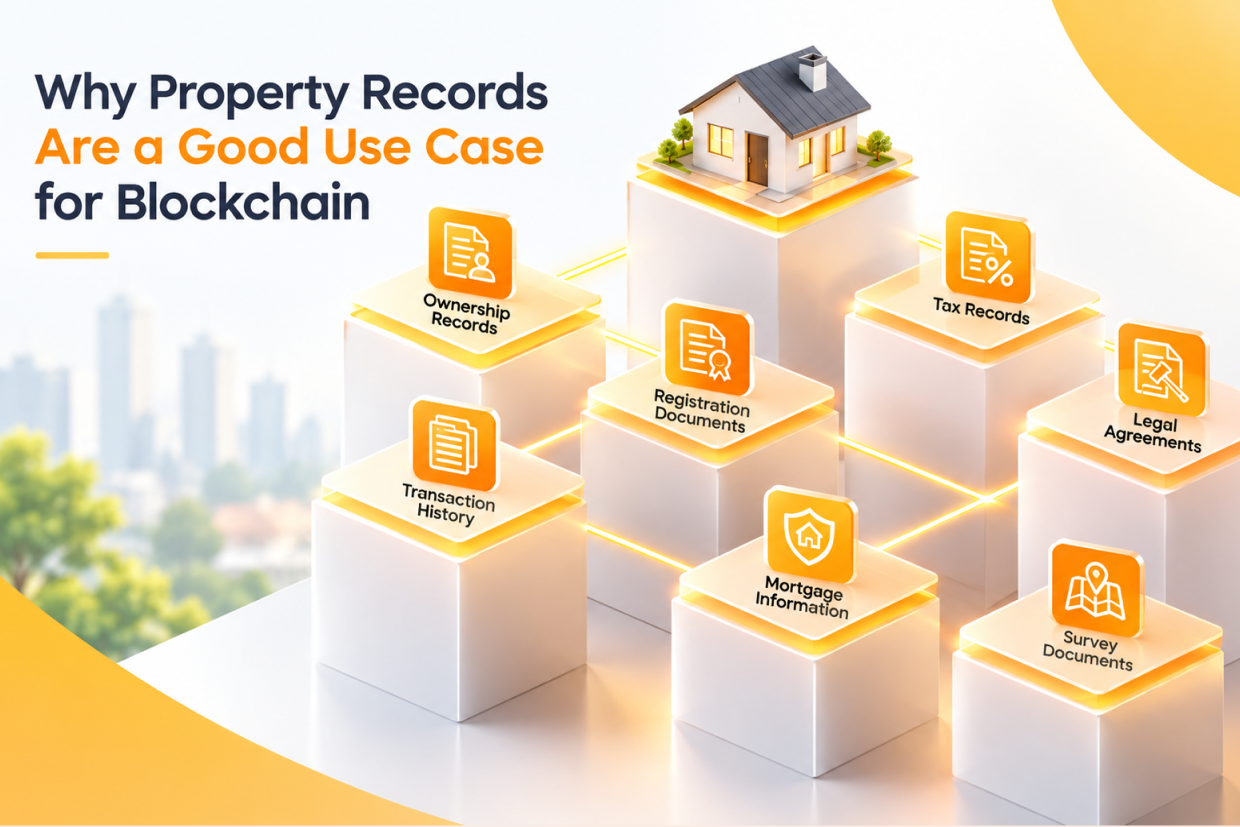
Property inspections, repair estimates, ownership records, and claim histories can be maintained through connected digital records.
The exact architecture depends on the insurer's existing systems, privacy requirements, regulations, and business processes.
The Biggest Benefit: Creating Trust Between Multiple Organizations
Insurance is fundamentally based on trust.
The insurer needs confidence in the information provided by the customer. The customer needs confidence that the insurer will process the claim fairly. Hospitals, garages, surveyors, agents, and other partners also need reliable ways to exchange information.
Blockchain can act as a shared trust layer between these participants.
Instead of every organization independently maintaining and reconciling records, authorized participants can verify important events against a common transaction history.
This is particularly valuable when a claim moves across multiple organizations and systems.
Blockchain Does Not Replace Your Existing Insurance Software
A common misconception is that implementing blockchain means replacing an organization's entire technology infrastructure.
That is not necessarily the case.
A blockchain solution can be integrated with existing CRM, ERP, insurance management systems, databases, APIs, and cloud platforms.
For example:
Customer App → Insurance Platform → API Layer → Blockchain Network → Partner Systems
This allows blockchain to function as a verification and trust layer while existing applications continue handling customer interfaces, business operations, analytics, and other functions.
Enterprise blockchain implementations commonly focus on integrating distributed ledgers with existing business systems rather than requiring organizations to rebuild everything from scratch.
What Businesses Should Consider Before Implementing Blockchain
Blockchain is not the answer to every business problem. A successful implementation starts by identifying where multiple parties need a trusted shared record.
Businesses should evaluate:
- How many organizations participate in the process?
- Where do disputes or reconciliation problems occur?
- Which records require stronger verification?
- What information should remain private?
- Which existing systems need integration?
- Can automation provide measurable business value?
Starting with a focused use case is often more practical than attempting to put an entire business operation on blockchain at once.
The Future of Blockchain in Insurance
Blockchain is increasingly being explored alongside technologies such as AI, IoT, APIs, and digital identity.
IoT devices can provide real-world event data, blockchain can preserve trusted records, and AI can analyze those records to identify unusual patterns.
For example:
IoT Data → Blockchain Verification → AI Analysis → Fraud Alert → Claim Investigation
This combination can move insurance organizations from reactive fraud investigation toward more proactive risk management.
Conclusion
Insurance companies face a difficult combination of fraud, manual verification, fragmented systems, and slow claim processing.
Blockchain can help address these problems by creating trusted records across multiple participants, improving document verification, supporting smart contract automation, and providing better visibility into the claim lifecycle.
The goal is not simply to use blockchain because it is a modern technology. The real value comes from applying it to processes where multiple parties need to share, verify, and trust the same information.
At Vriksha Tech Solutions, we develop customized blockchain solutions that integrate with existing business systems to improve transparency, automate workflows, strengthen verification, and solve real-world operational challenges.
Frequently Asked Questions
How can blockchain reduce insurance claim fraud?
By helping detect suspicious claims and improving document verification, using shared records that multiple parties can trust.
What do smart contracts do in insurance claims?
They automate repetitive claim processes, which helps speed up the routine steps of handling a claim.
Does blockchain replace existing insurance software?
No. The article states it does not replace existing insurance software. It works alongside it, and businesses should weigh several considerations before implementing it.
Ready to Build Your Next Digital Product?
Our experts will respond within 24 hours with a tailored approach for your project.