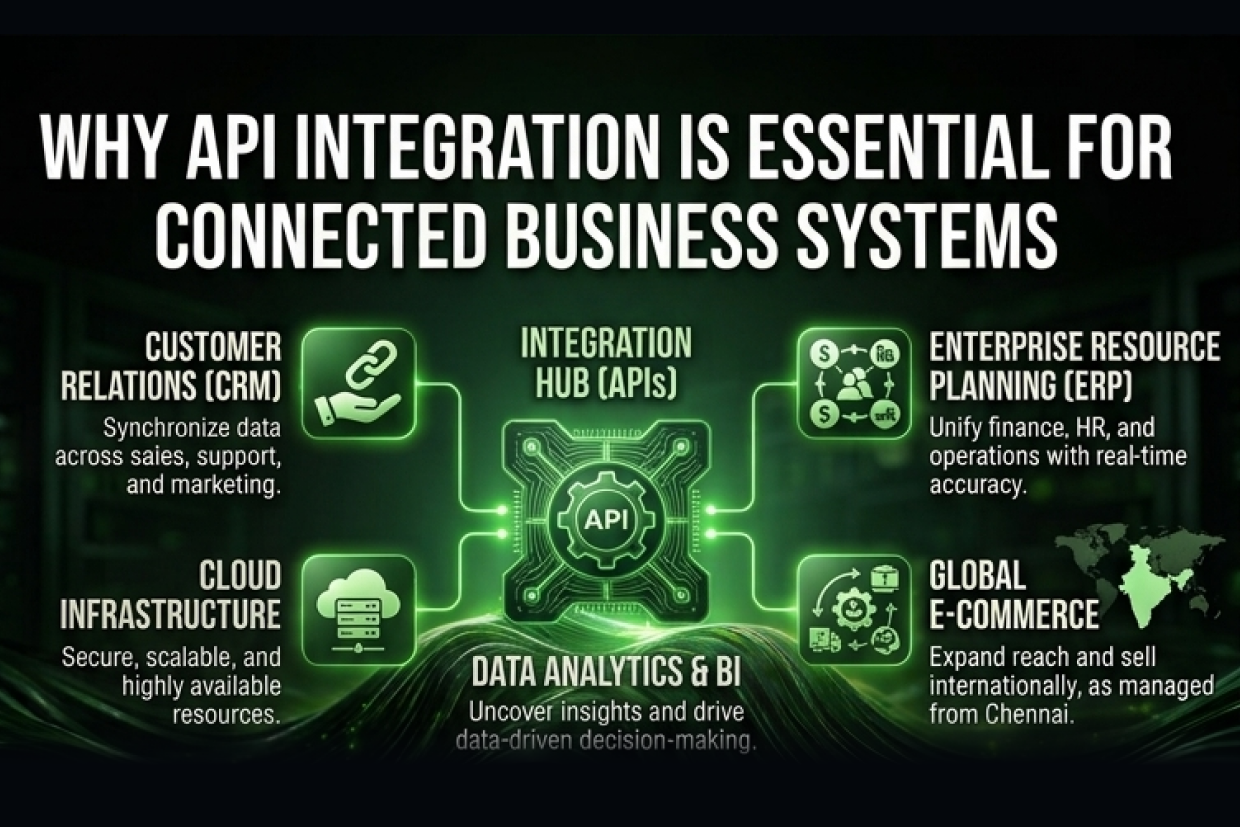
As businesses grow, so does the number of software applications they depend on. Sales teams work in CRM platforms, finance teams use accounting software, HR manages employee records in separate systems, while websites, mobile applications, payment gateways, and customer support platforms all operate independently.
While each application performs its own task efficiently, the lack of communication between them often creates hidden operational challenges.
Employees manually transfer information, customer records become inconsistent, reports take longer to generate, and simple business processes require multiple steps across different platforms.
The problem isn't the software itself—it's that the software isn't connected.
Connect your business applications with our API Development & Integration Services to automate workflows and improve operational efficiency.
The Cost of Working with Isolated Systems
Disconnected systems affect every department within an organization.
A sales representative updates customer information in the CRM, but the finance system doesn't receive those updates automatically. Inventory changes after a purchase, but the warehouse team still works with outdated stock information. Marketing campaigns continue targeting customers who have already completed purchases because customer data isn't synchronized.
These small inefficiencies gradually increase operational costs while reducing overall productivity.
Signs Your Business Needs API Integration
As your organization expands, these challenges become more noticeable.
| Business Challenge | Impact on Operations |
|---|---|
| Duplicate customer records | Inaccurate reporting and communication |
| Manual data entry | Increased human errors |
| Multiple software logins | Reduced employee productivity |
| Delayed information updates | Slower business decisions |
| Different departments using different data | Poor collaboration |
If your team frequently copies information between systems, API integration can eliminate much of that manual work.
How API Integration Creates Connected Workflows
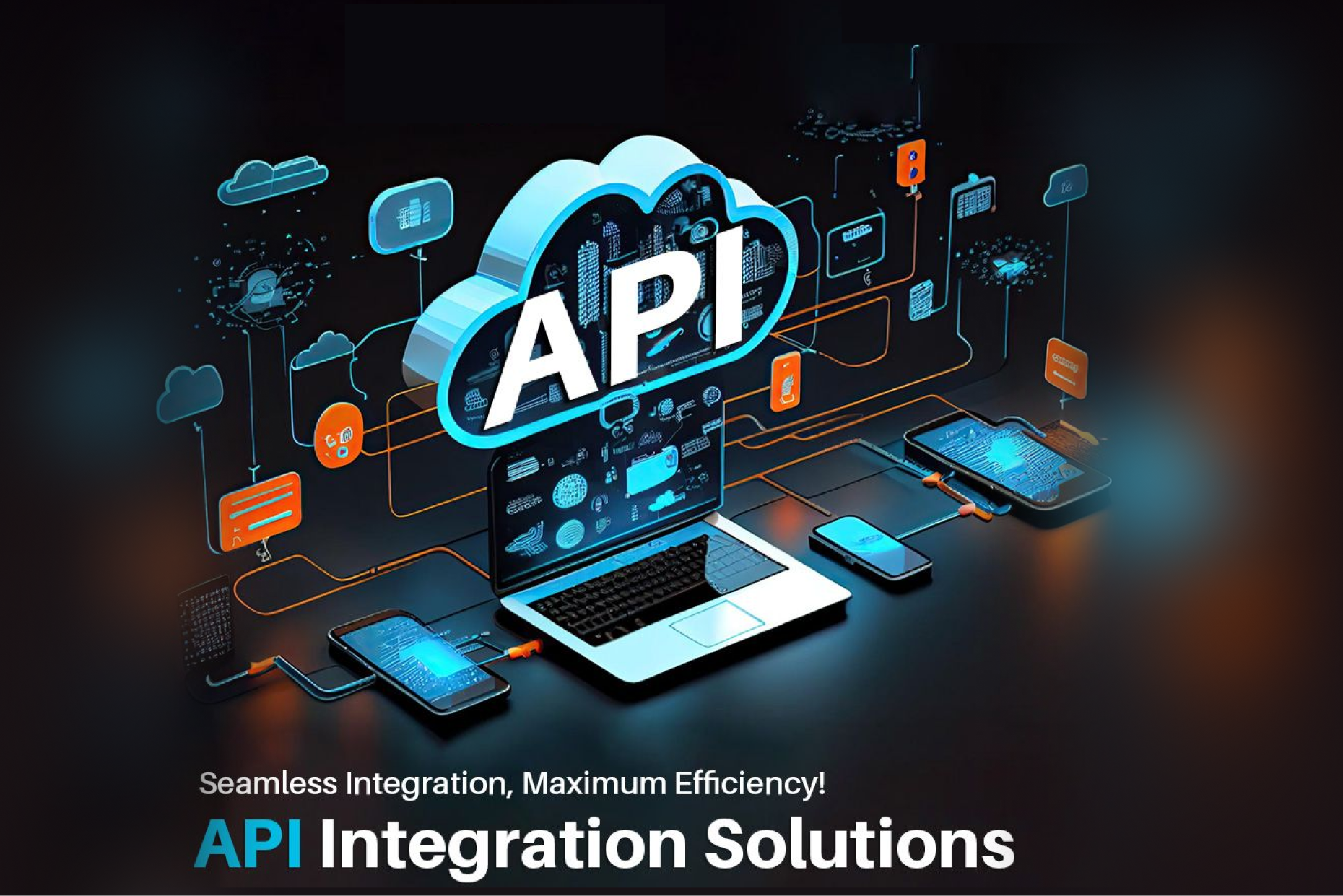
API integration allows independent applications to exchange information automatically and securely.
Instead of asking employees to update multiple systems, APIs ensure information flows in real time. When a customer places an order, payment can be confirmed instantly, inventory can update automatically, invoices can be generated immediately, and shipping partners can receive delivery details without manual intervention.
This creates a connected business environment where information remains accurate across every platform.
Looking to automate business operations? Explore our Custom Software Development Services for scalable business solutions integrated with modern APIs.
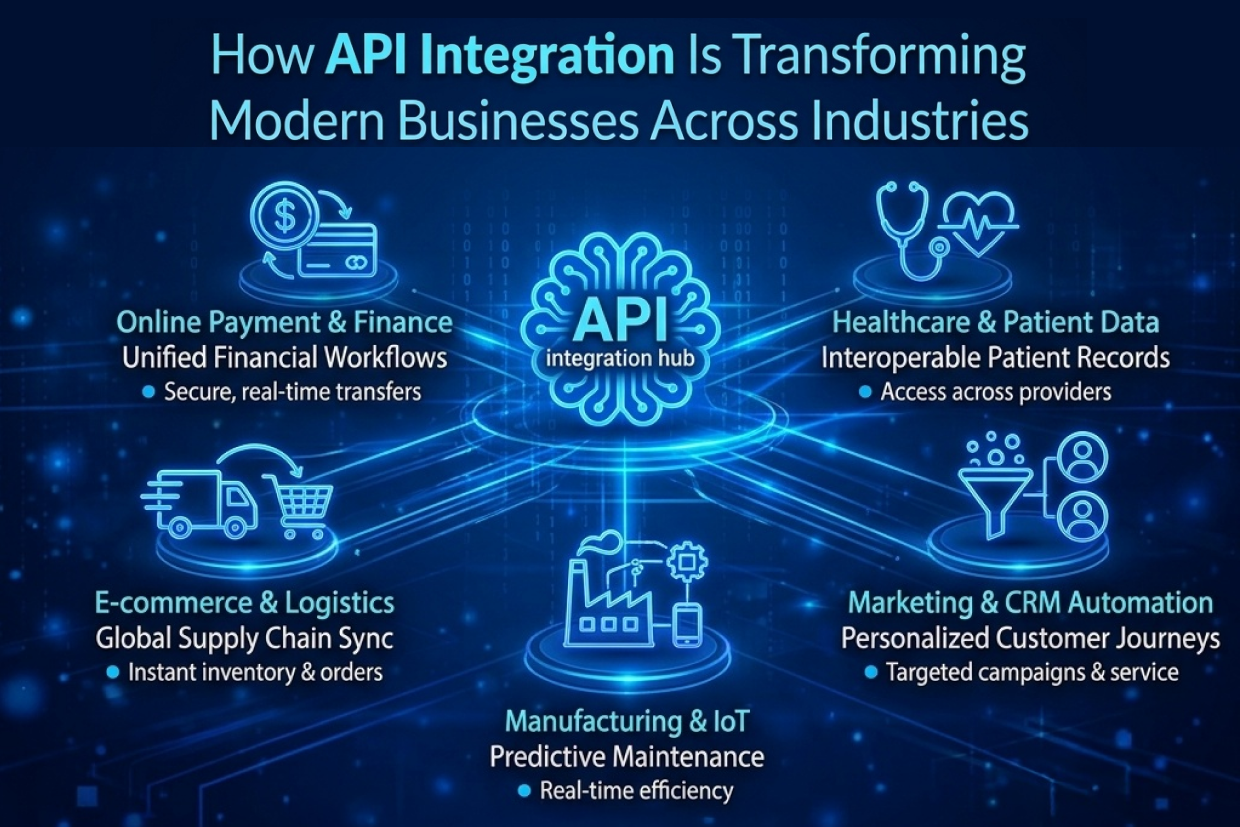
Examples Across Different Industries
Organizations across various industries rely on API integration to simplify operations.
Retail businesses connect e-commerce websites with inventory management and payment systems to process orders faster.
Healthcare providers integrate appointment scheduling with patient management systems, reducing administrative effort.
Financial institutions connect banking services with fraud detection and customer verification platforms to improve security and transaction processing.
Travel companies synchronize booking platforms, payment gateways, and notification services to provide customers with real-time updates.
Regardless of the industry, connected systems create faster and more reliable business operations.
Connected Systems vs. Disconnected Systems
| Without API Integration | With API Integration |
|---|---|
| Data entered multiple times | Single source of synchronized data |
| Delayed updates between systems | Real-time information sharing |
| Manual workflows | Automated business processes |
| Higher risk of errors | Improved accuracy |
| Departments work independently | Better collaboration across teams |
Businesses that integrate their systems spend less time managing information and more time delivering value to customers.
Building for Future Growth
Digital transformation isn't about adding more software—it's about making existing software work together.
As businesses adopt cloud platforms, AI applications, mobile apps, and automation tools, seamless integration becomes increasingly important. APIs provide the foundation for scalable digital ecosystems, allowing organizations to introduce new technologies without disrupting existing operations.
A connected infrastructure also makes future upgrades easier, reducing implementation time for new services and improving overall business agility.
Planning to modernize your digital ecosystem? Discover our AI Development Services and Cloud & DevOps Solutions to build scalable, connected business platforms.
Conclusion
Technology should simplify business operations, not create additional complexity.
API integration enables organizations to eliminate repetitive manual tasks, improve data consistency, and connect business-critical applications into one efficient workflow. As customer expectations continue to evolve, businesses with connected systems are better equipped to respond quickly, make informed decisions, and scale with confidence.
Rather than treating each application as a separate tool, API integration transforms them into a unified digital ecosystem that supports long-term business growth.
Ready to Build Your Next Digital Product?
Our experts will respond within 24 hours with a tailored approach for your project.