Short answer: the strongest tourism business opportunities today are platforms that connect travellers with local supply: tour and experience booking, homestays and vacation rentals, vehicle and bike rentals, custom itinerary services and corporate or group travel. Most of them do not need you to own hotels or vehicles; they need reliable partners, a booking and payment system, and a way to manage providers. Pick one niche and one region, prove demand, then expand.
This guide is for entrepreneurs and travel businesses in India and abroad. It compares 10 opportunities, explains the technology each one needs and the steps to start.
The tourism industry offers opportunities for entrepreneurs who want to build businesses around travel, accommodation, transportation, local experiences, and digital services. From organising customised trips to developing online booking platforms, businesses can serve travellers in different ways without necessarily owning every service they offer.
As travellers explore new destinations and look for convenient ways to plan their journeys, there is room for specialised travel services and technology-enabled business models. The key is to identify a specific customer need, build reliable partnerships, and create an experience that makes travelling easier.
In this article, we explore some of the promising business opportunities in the tourism industry, how their business models work, and the technology that can support their growth.
Why Consider Starting a Tourism Business?
Tourism involves several connected industries, including hospitality, transportation, entertainment, food, local experiences, and travel services. This creates opportunities for businesses to focus on one segment or connect multiple service providers through a single platform.
Some reasons entrepreneurs explore this industry include:
- Different customer segments: Businesses can serve families, solo travellers, corporate groups, adventure seekers, and international visitors.
- Specialised travel experiences: Heritage tours, food trails, wellness trips, and adventure activities allow businesses to focus on a particular interest.
- Partnership opportunities: Travel agencies, hotels, guides, transport providers, and activity organisers can work together.
- Digital business models: Websites and mobile applications can help customers discover, compare, and book travel services.
- Multiple revenue options: Depending on the business model, revenue may come from commissions, service fees, packages, subscriptions, or direct bookings.
Top Business Opportunities in the Tourism Industry
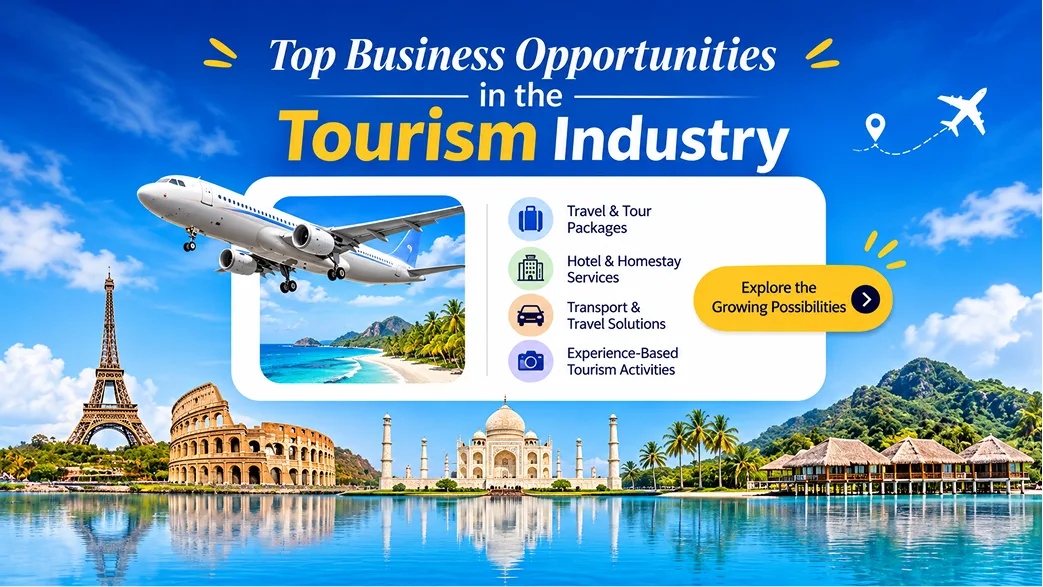
1. Online Travel Booking Marketplace
An online travel booking marketplace connects travellers with service providers such as hotels, travel agencies, transport operators, and tour organisers. Customers can search for available services, compare options, and make reservations through a website or mobile application.
Rather than operating every service directly, the platform owner can onboard multiple providers and facilitate bookings between them and travellers.
Essential platform features:
- Hotel, transport, and tour listings
- Search filters based on location, price, date, and category
- Availability and booking management
- Secure payment integration
- Booking confirmation and cancellation workflows
- Customer reviews and ratings
- Provider dashboards and an admin control panel
Possible revenue models: Commission per booking, provider subscription plans, featured listings, or service fees.
2. Vacation Rental and Homestay Platform
Many travellers look for accommodation beyond conventional hotels. Vacation rental and homestay platforms allow property owners to list apartments, villas, guest houses, farm stays, or individual rooms for short-term stays.
This business model can be developed for a specific destination, property category, or traveller segment. For example, a platform could focus on family-friendly homestays, countryside properties, or accommodation near popular tourist destinations.
Essential platform features:
- Property registration and listing management
- Photo galleries and property descriptions
- Location-based search
- Availability calendars and reservation management
- Host and guest dashboards
- Payment, refund, and cancellation management
- Guest reviews and property verification workflows
Possible revenue models: Booking commissions, host subscriptions, listing fees, or optional promotional services.
3. Local Tour and Experience Booking Business
Travellers often want to explore a destination through experiences organised by people who understand the local culture. This creates an opportunity for businesses that arrange heritage walks, food tours, cultural programmes, photography trips, workshops, and guided sightseeing.
Entrepreneurs can start with a small collection of curated experiences and gradually onboard more local guides and organisers.
Examples of services:
- Historical and heritage tours
- Local food and culinary experiences
- Village and cultural tourism
- Photography and nature walks
- Festival and event experiences
- Customised sightseeing packages
Possible revenue models: Per-person ticket pricing, private tour fees, commissions from local organisers, and customised package charges.
4. Adventure Tourism and Activity Booking Platform
Adventure tourism businesses organise activities for travellers seeking experiences beyond conventional sightseeing. Depending on the destination and applicable safety requirements, these may include trekking, cycling, water sports, camping, wildlife experiences, and other outdoor activities.
An online booking platform can connect customers with verified activity operators, display available schedules, and simplify reservations.
Essential platform features:
- Activity categories and detailed descriptions
- Difficulty levels and age requirements
- Available dates and time slots
- Participant limits and booking management
- Safety instructions and required equipment information
- Operator profiles and verification
- Cancellation policies and customer support
Possible revenue models: Booking commissions, activity packages, operator subscriptions, or promotional listings.
Businesses operating adventure activities should establish suitable safety procedures, insurance arrangements, trained personnel, and required permissions before accepting bookings.
5. Vehicle and Bike Rental Services for Travellers
Transportation is an important part of the travel experience. Entrepreneurs can start vehicle rental services for tourists who want to explore destinations independently or need convenient local transportation.
Depending on the target market, the business may offer bicycles, motorcycles, scooters, cars, or other suitable vehicles.
A digital rental platform can connect vehicle owners with travellers and manage the rental process.
Essential platform features:
- Vehicle listings with images and specifications
- Location-based vehicle discovery
- Rental pricing and availability calendars
- Booking and payment management
- Document and eligibility verification
- Pickup and return scheduling
- Rental history and customer support
Possible revenue models: Rental charges, booking commissions, delivery fees, or membership plans.
6. Travel Equipment Rental Business
Some travellers need specialised equipment only for a short period. Buying expensive equipment for a single trip may not be practical, creating an opportunity for rental businesses.
Depending on the destination and customer segment, businesses can rent camping equipment, trekking gear, bicycles, diving equipment, photography accessories, or other travel-related items.
Essential platform features:
- Equipment catalogue and product specifications
- Rental duration and availability management
- Booking and payment processing
- Security deposit handling
- Delivery and return tracking
- Equipment condition records
- Damage and late-return policies
Possible revenue models: Daily or weekly rental charges, delivery fees, deposits, and equipment bundles.
7. Travel Planning and Custom Itinerary Services
Planning a trip can involve researching destinations, comparing accommodation, arranging transportation, selecting activities, and managing schedules. Some travellers prefer assistance from a specialist who can organise these details based on their interests and budget.
A travel planning business can provide personalised itineraries for families, couples, solo travellers, corporate groups, or special-interest communities.
Services may include:
- Destination research and recommendations
- Day-wise itinerary preparation
- Hotel and transport coordination
- Activity and restaurant suggestions
- Group travel planning
- Custom travel consultation
Possible revenue models: Consultation charges, itinerary preparation fees, package margins, or commissions from service partners.
8. Travel Community and Destination Discovery Platform
Travellers frequently look for recommendations, practical travel information, and first-hand experiences before choosing a destination. A travel community platform can bring this information together through destination guides, discussion spaces, user-submitted content, and reviews.
Entrepreneurs can focus on a particular region, travel style, or community rather than trying to cover every destination from the beginning.
Essential platform features:
- Destination guides and travel articles
- User profiles and discussion groups
- Photo and experience sharing
- Reviews and ratings
- Saved destinations and travel collections
- Content moderation and reporting
- Links to relevant booking services
Possible revenue models: Sponsored destination content, advertising, premium memberships, affiliate commissions, or promoted listings.
Authenticity is particularly important for community platforms. Businesses should have clear moderation policies and processes to identify misleading reviews or promotional content.
9. Corporate Travel and Group Tour Management
Companies, educational institutions, and other organisations may need support arranging employee travel, conferences, team outings, educational tours, or group holidays.
A specialised travel management business can coordinate bookings and logistics for these customers through a centralised service.
Possible services include:
- Corporate travel arrangements
- Employee retreats and team outings
- Conference and event travel coordination
- Educational and institutional tours
- Group accommodation and transport
- Travel expense and booking reports
Possible revenue models: Corporate service agreements, management fees, per-booking charges, or customised package pricing.
10. Sustainable, Wellness, and Special-Interest Tourism
Tourism businesses can also focus on travellers who have specific interests or preferences. These may include nature-based experiences, wellness retreats, spiritual journeys, rural tourism, heritage experiences, or responsible travel programmes.
Instead of competing across every travel category, a business can build a focused offering around a destination or experience that it understands well.
Possible business offerings:
- Yoga and wellness retreat coordination
- Nature and wildlife experiences
- Responsible rural tourism programmes
- Heritage and spiritual travel packages
- Local craft and cultural workshops
- Special-interest group tours
Possible revenue models: Retreat packages, guided experience fees, accommodation partnerships, and customised group programmes.
Comparison of Tourism Business Opportunities
The following comparison can help entrepreneurs identify a business model that matches their resources, experience, and target customers.
| Business opportunity | Primary customers | Possible revenue model | Key operational requirement |
|---|---|---|---|
| Travel booking marketplace | General travellers | Booking commission | Reliable service-provider network |
| Vacation rental platform | Families and holiday travellers | Commission or listing fee | Property onboarding and availability |
| Local experience booking | Experience-focused travellers | Ticket or booking fee | Local guides and organisers |
| Adventure activity platform | Adventure travellers | Booking commission | Operator quality and safety processes |
| Vehicle rental service | Independent travellers | Rental charges | Vehicle availability and verification |
| Equipment rental | Outdoor and activity travellers | Rental charges | Equipment maintenance and returns |
| Travel planning service | Individuals and groups | Consultation or package fee | Destination knowledge and coordination |
| Travel community platform | Travel researchers and communities | Advertising or sponsorship | Useful content and moderation |
| Corporate travel management | Companies and institutions | Service or management fee | Vendor coordination and reporting |
| Wellness and special-interest tourism | Niche traveller groups | Package pricing | Specialist partners and experience quality |
These are illustrative business models, not guaranteed profit opportunities. Actual investment, operating costs, and revenue potential depend on the location, service scope, competition, and business strategy.
How Digital Technology Supports Tourism Businesses
Technology can help tourism businesses manage operations, connect with customers, and coordinate multiple service providers. The right solution depends on whether the business operates as a travel agency, booking marketplace, rental service, tour operator, or destination information platform.
1. Travel Booking Website
A website can serve as the main channel for displaying destinations, packages, accommodation, activities, and available services. Customers should be able to search, compare, and submit bookings through a straightforward process.
2. Customer Mobile Application
A mobile application can help travellers access booking details, view itineraries, receive notifications, contact support, and check important trip information while travelling.
3. Service Provider Dashboard
Hotels, guides, vehicle owners, and tour operators may need their own dashboards to manage listings, prices, schedules, availability, and customer bookings.
4. Admin Management Panel
The administration team needs a central place to manage users, providers, bookings, payments, commissions, service categories, cancellations, and reports.
5. Payment and Third-Party Integrations
Payment gateways and suitable third-party travel APIs can help connect booking workflows with external services. Integrations should be selected according to the business model, provider agreements, target markets, and technical requirements.
6. Analytics and Reporting
Reports can help business owners understand booking trends, popular destinations, customer enquiries, provider performance, cancellations, and revenue. These insights support better operational decisions.
What a Tourism Platform Needs at Launch, and What Can Wait
| Area | Needed at launch | Can wait |
|---|---|---|
| Customers | Search, availability, booking, online payment, confirmation by WhatsApp or email | Loyalty points, social sharing, multi-language |
| Providers | Listing, calendar, booking alerts, payout reports | Dynamic pricing, provider analytics |
| Admin | Provider approval, commissions, refunds, support | Advanced reports, marketing tools |
Rentals for travellers follow the same pattern. OwnCarz, a car rental platform we built, shows how booking, availability and vehicle management fit together, and our guides to experience marketplaces and Airbnb-style property rental apps go deeper. To get providers on board quickly, read how to onboard vendors to a new marketplace.
Steps to Start a Tourism Business
A clear launch plan can help entrepreneurs reduce uncertainty and focus on the most important business requirements.
- Research the target market: Understand the destination, traveller segment, competitors, seasonal demand, and customer expectations.
- Select a focused business model: Decide whether to offer travel planning, accommodation, transport, local experiences, rentals, or a booking marketplace.
- Identify service partners: Build relationships with hotels, guides, transport operators, activity organisers, or other relevant providers.
- Prepare the business and financial plan: Estimate setup costs, operating expenses, pricing, expected demand, and possible revenue streams.
- Check legal and operational requirements: Review applicable registrations, licences, local permissions, insurance, tax obligations, consumer protection requirements, and safety responsibilities.
- Plan the digital platform: Define the website, mobile app, booking workflows, provider dashboards, payment integrations, and administration requirements.
- Launch with a manageable service area: Start with a selected destination or category, collect customer feedback, and improve the offering before expanding.
- Promote the business: Use search engine optimisation, useful destination content, social media, partnerships, referrals, and relevant advertising.
- Monitor performance: Track bookings, customer satisfaction, repeat enquiries, cancellations, provider reliability, and operating costs.
Common Challenges in the Tourism Industry
Tourism businesses must manage several operational and market-related challenges. Identifying them early can help entrepreneurs prepare practical solutions.
- Seasonal demand: Bookings may fluctuate depending on holidays, weather, festivals, and destination conditions. Businesses can explore alternative packages and off-season experiences.
- Service-provider reliability: Poor coordination or last-minute cancellations can affect customer trust. Establish clear agreements and provider communication processes.
- Strong competition: A new business needs a clear focus, useful service differentiation, and a consistent customer experience.
- Booking and availability errors: Outdated schedules can lead to double bookings or customer dissatisfaction. Use centralised availability and reservation management.
- Customer safety and trust: Verify relevant providers, communicate service conditions, and maintain appropriate safety and support procedures.
- Changing customer expectations: Travellers may expect convenient mobile access, clear pricing, flexible communication, and timely updates.
- Technology and integration costs: Booking systems, payment services, and external APIs require planning, maintenance, and ongoing support.
How to Choose the Right Tourism Business Opportunity
Not every tourism business model is suitable for every entrepreneur. Before investing, evaluate the opportunity using a few practical questions:
- Do you understand the destination or traveller segment you want to serve?
- Is there a clear customer problem that your service can solve?
- Can you build reliable relationships with the required service providers?
- Does the business require physical assets, or can it operate through partnerships?
- What will customers pay for, and how will the business earn revenue?
- Can the service operate beyond peak travel seasons?
- What technology, legal permissions, and operational processes will be required?
Starting with a clearly defined customer group and a manageable service offering can make it easier to test the business model before expanding into additional destinations or services.
Conclusion
The tourism industry provides opportunities across accommodation, transportation, travel planning, local experiences, adventure activities, rentals, and specialised travel services. Entrepreneurs can build a focused service business or create a digital platform that connects travellers with multiple providers.
Success depends on more than selecting an attractive business idea. It requires understanding customer needs, building dependable partnerships, planning revenue and operations, and delivering a consistent experience. Digital technology can support this process through booking websites, mobile applications, provider dashboards, payment integrations, and centralised management systems.
Planning a tour, rental or travel booking platform? Share your niche, region and the providers you plan to work with. We will send you a free first-version feature list and a phased launch plan. See our travel industry work and travel experiences marketplace solution. Vriksha Tech has built web and mobile software from Chennai since 2006, with 800+ clients and 1,200+ projects delivered.
Frequently Asked Questions
What are the best business opportunities in the tourism industry?
Some opportunities include online travel booking marketplaces, vacation rental platforms, local tour services, adventure activity booking, vehicle rentals, travel planning, corporate travel management, and wellness tourism. The right option depends on customer demand, location, investment capacity, and operational expertise.
Can I start a tourism business without owning hotels or vehicles?
Yes. Some tourism business models operate by connecting travellers with independent service providers. For example, a booking marketplace can onboard hotels, guides, vehicle owners, and tour operators rather than owning those assets directly. The business still needs reliable partners and clear service agreements.
Is an online travel booking platform a good business idea?
It can be a suitable business model when there is a defined target market and access to reliable travel service providers. Before launching, research competitors, identify a clear point of difference, plan booking operations, and determine how the platform will generate revenue.
What features should a travel booking website have?
A travel booking website may need destination and service listings, search filters, availability calendars, booking management, payment integration, customer accounts, notifications, reviews, provider dashboards, and an admin panel. The final feature set depends on the type of travel services being offered.
How can a mobile app help a tourism business?
A mobile app can help customers browse services, manage reservations, view itineraries, receive trip updates, access support, and check booking information while travelling. It can also support service providers with booking and schedule management.
How do tourism marketplaces earn revenue?
Tourism marketplaces may earn through booking commissions, listing fees, provider subscriptions, featured placements, service charges, or advertising. The suitable model depends on the platform's audience, service category, and value offered to providers.
What should I consider before developing a tourism platform?
Define the target audience, business model, service-provider workflow, booking process, payment requirements, cancellation policies, integrations, and administration needs. It is also important to plan for security, scalability, maintenance, and applicable legal requirements.
How much does it cost to develop a travel booking platform?
The cost depends on the platform's scope, number of user roles, booking workflows, mobile app requirements, payment integrations, third-party APIs, and custom features. A focused MVP can begin with essential booking functionality, while a larger marketplace may require more extensive development.
How can I promote a new tourism business?
A new tourism business can use destination-focused SEO content, social media, partnerships with local providers, customer referrals, travel communities, and targeted advertising. Genuine customer reviews and useful travel information can also help build credibility.
Ready to Build Your Next Digital Product?
Our experts will respond within 24 hours with a tailored approach for your project.