Short answer: The ecommerce trends worth acting on remove friction or cost: fast mobile stores, AI search and recommendations, local payment options, WhatsApp and chat support, faster local delivery, loyalty and one inventory across channels. Fix the basics first, then add the one or two that fit your customers.
The ecommerce trends worth acting on are the ones that remove friction for buyers or cost for you: fast mobile stores, search and recommendations that understand shoppers, payments that match local habits, support on WhatsApp and chat, quicker local delivery, loyalty that brings customers back and connected stock across every channel. Most online stores should not chase every trend. Fix the basics first, then add the one or two changes that match your customers and margins.
Which Trends Matter for Your Store
| Trend | Worth it when | Start with |
|---|---|---|
| Mobile speed | Always | Image sizes, fewer scripts, fast checkout |
| AI search and recommendations | Large or varied catalogue | Search that handles typos and synonyms |
| Local payment options | Always | UPI, cards, wallets, COD rules |
| Chat and WhatsApp commerce | Customers ask before buying | Order status and FAQs on WhatsApp |
| Fast local delivery | Groceries, food, everyday items | Store-level stock and delivery slots |
| Loyalty and subscriptions | Repeat-purchase products | Simple points or a refill plan |
| Omnichannel stock | You sell online and in stores | One inventory across channels |
1. The Mobile Store Is the Store
Most shoppers browse and buy on phones, often on mid-range devices and patchy networks. A slow product page loses the sale before any other trend matters. Compress images, cut third-party scripts and keep checkout short. Our checklists for product pages that convert and reducing cart abandonment cover the fixes that pay off first.
2. Search and Recommendations That Understand Shoppers
Shoppers expect a store search to work like Google: forgiving typos, understanding "red cotton kurta under 1000" and showing what is in stock. AI-based search and recommendations make a real difference once a catalogue is large or varied, but only if product data is clean. See AI in online shopping for what each feature needs and how to measure it. Behind the storefront, the same data powers forecasting and reorder alerts.
3. Payments That Match Local Habits
In India, UPI is the default for many buyers, cards and wallets matter for others, and cash on delivery still needs rules to limit returns. Abroad, local wallets and buy-now-pay-later options play the same role. Offering the right mix, with a fast and reliable gateway, removes a common reason for abandoned carts. Our guide on how to choose a payment gateway in India compares the options.
4. Conversational Commerce
Many customers prefer to ask a question on WhatsApp or chat before buying, and to get order updates there afterwards. Start with order status, delivery questions and returns, and hand complex or high-value conversations to a person. AI customer support agents for ecommerce explains what to automate and what to keep human.
5. Faster, Local Delivery
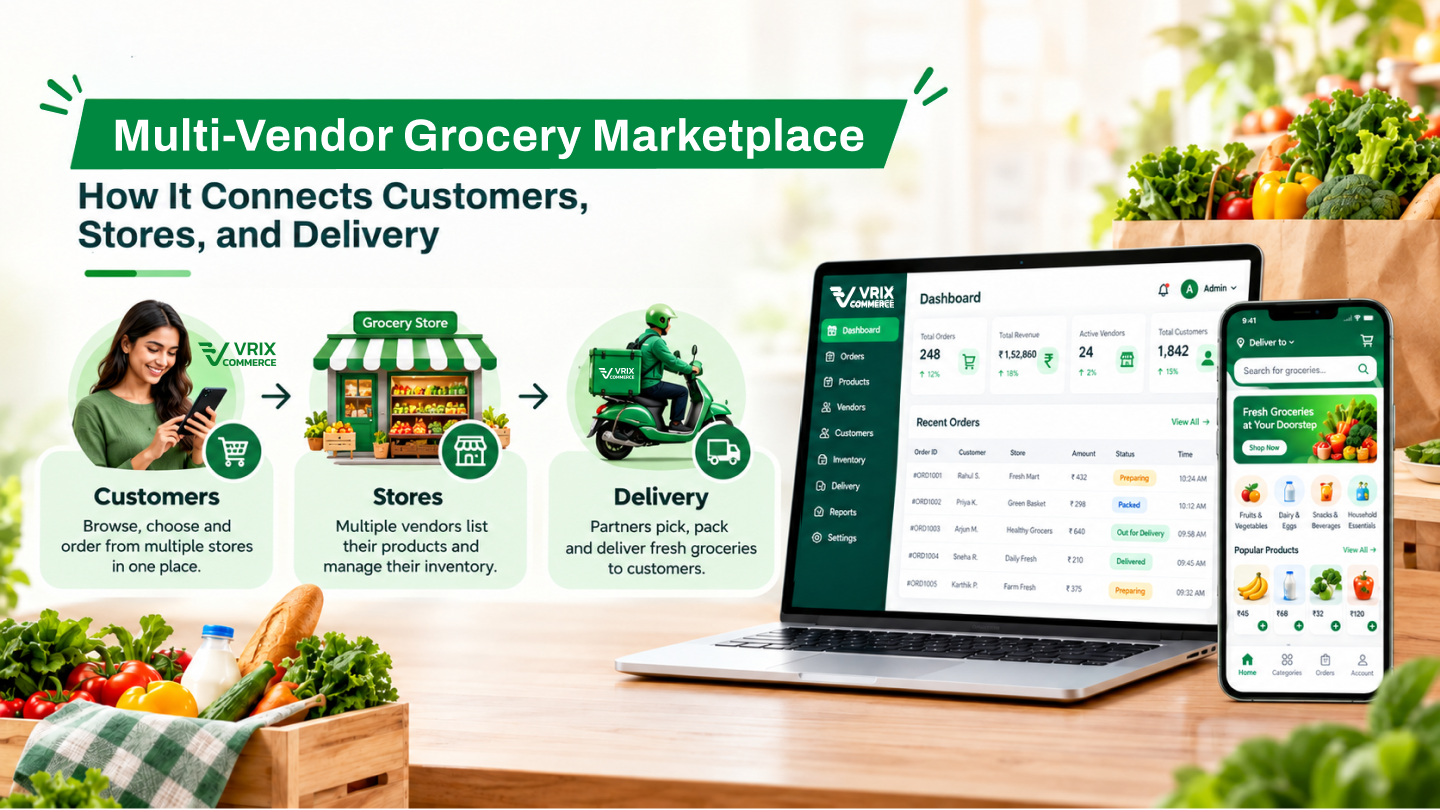
Same-day and slot-based delivery have changed expectations for groceries, food and everyday items. Delivering fast depends less on the website and more on knowing stock at each store or warehouse and assigning orders well. Businesses in this space often start with a grocery delivery platform rather than a general online store.
6. Loyalty, Subscriptions and Repeat Buying
Winning a new customer usually costs more than keeping one, so repeat buying matters more as ad costs rise. Points, tiers, member pricing and refill subscriptions each suit different products; see which loyalty programme model fits your store.
7. One Inventory Across Online and Stores
Brands with physical stores increasingly sell the same stock online, offer click-and-collect and show in-store availability. This needs one connected inventory, not separate spreadsheets. Helios, a multi-brand luxury watch retailer, is an example of bringing a store-led brand online with one consistent shopping experience.
Trends to Treat With Caution
- Voice shopping and AR try-ons: useful in a few categories, such as furniture or eyewear, but rarely a priority for most stores.
- Headless commerce: gives design freedom and speed, but adds cost and complexity. Worth it for large catalogues or many channels, not for a new store.
- Building everything custom: compare Shopify, WooCommerce and custom before you commit.
How to Decide What to Do Next
List your biggest losses first: slow pages, abandoned carts, unanswered questions or one-time buyers. Pick the trend that fixes the largest one, measure it for a month, then move to the next. Make sure your hosting can handle the extra traffic each improvement brings, especially on sale days.
Frequently Asked Questions
What is the biggest ecommerce trend right now?
For most stores, it is still mobile-first speed and simple checkout, followed by smarter search and recommendations. These affect every visitor, while newer trends only help specific categories.
What is conversational commerce?
Selling and supporting customers through chat channels such as WhatsApp, Instagram or a website chat, including product questions, order updates and returns.
Should a small online store use AI?
Yes, in focused ways: better search, product recommendations and answers to common questions. Start where you have enough data and clean product information.
Planning your store's next upgrade? Explore our ecommerce development services and the ready-made Vrix Commerce platform, or tell us your biggest sales problem and we will suggest what to fix first.
Ready to Build Your Next Digital Product?
Our experts will respond within 24 hours with a tailored approach for your project.