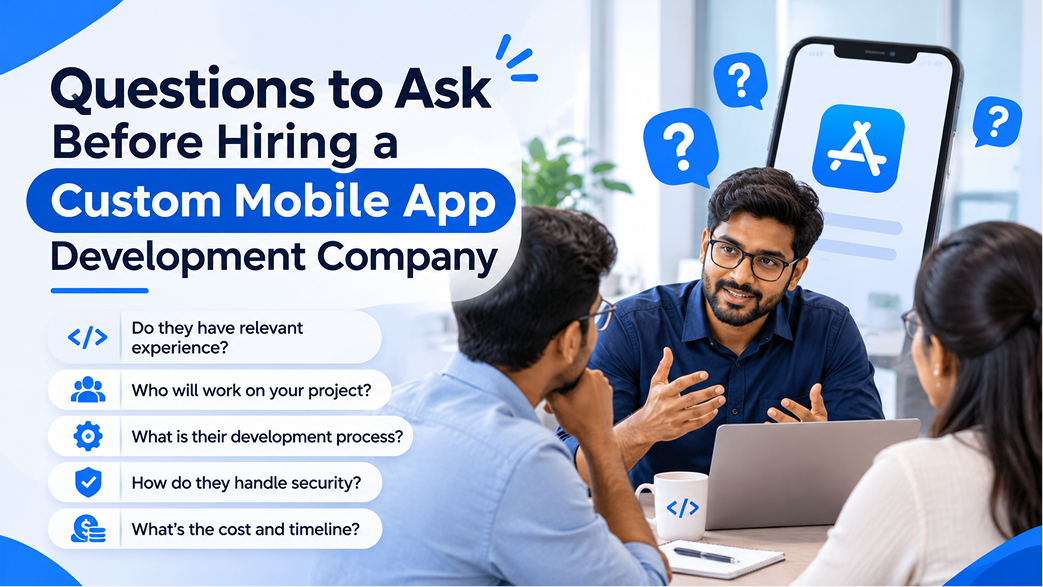
Short answer: before hiring a custom mobile app development company, ask five things above all: have you built an app like mine (and can I see it), how do you estimate cost and what is not included, how do you handle changes, who owns the source code and store accounts, and what happens after launch. Clear, specific answers to these predict a smooth project better than a low quote does.
This guide lists 12 questions to ask, what a good answer sounds like, how to compare proposals and the warning signs to watch for. It is written for business owners and managers hiring an app company for the first time, or replacing one that did not work out.
Choosing the right mobile app development company is an important decision for any business planning to build a digital product. The development partner you select can influence the application's quality, user experience, security, delivery timeline, and long-term maintenance.
However, finding a company that offers mobile app development services is not the same as finding one that understands your business requirements and can deliver a suitable solution. Before making a decision, you should evaluate its technical expertise, development process, communication practices, project experience, and support arrangements.
Whether you are planning an eCommerce application, an on-demand platform, a booking app, or an internal business application, asking the right questions can help you make a more informed choice.
Here are the important questions to ask before hiring a custom mobile app development company.
1. Which Mobile Platforms Do You Develop Applications For?
Start by understanding which platforms the company supports. Most businesses consider Android and iOS, but the right development approach depends on their target audience, business goals, and application requirements.
Ask the development company:
- Do you develop native Android applications?
- Do you develop native iOS applications?
- Can you build applications for both platforms?
- Do you support cross-platform development?
- Can you help decide which platform should be launched first?
A company should be able to explain the advantages and limitations of different approaches rather than recommending one option for every project.
For example, a business may initially launch on the platform most commonly used by its target customers and expand to another platform later. Another business may need Android and iOS applications from the beginning to serve a wider audience.
The important point is to select a platform strategy that fits your users and project scope.
2. Do You Recommend Native or Cross-Platform Development?
Mobile applications can be developed using different approaches. Native development focuses on a specific operating system, while cross-platform development allows a substantial portion of the codebase to be shared across multiple platforms.
Ask the company to explain:
- Which approach is suitable for your application and why?
- What are the performance considerations?
- How will the chosen approach support device-specific features?
- What are the development and maintenance implications?
- How will future platform updates be handled?
Native development may be appropriate when an application requires extensive platform-specific functionality or a highly tailored platform experience. Cross-platform development may be suitable when shared code and consistent experiences across platforms are important.
There is no universally correct choice. The decision should be based on the application's features, technical requirements, available resources, and long-term plans.
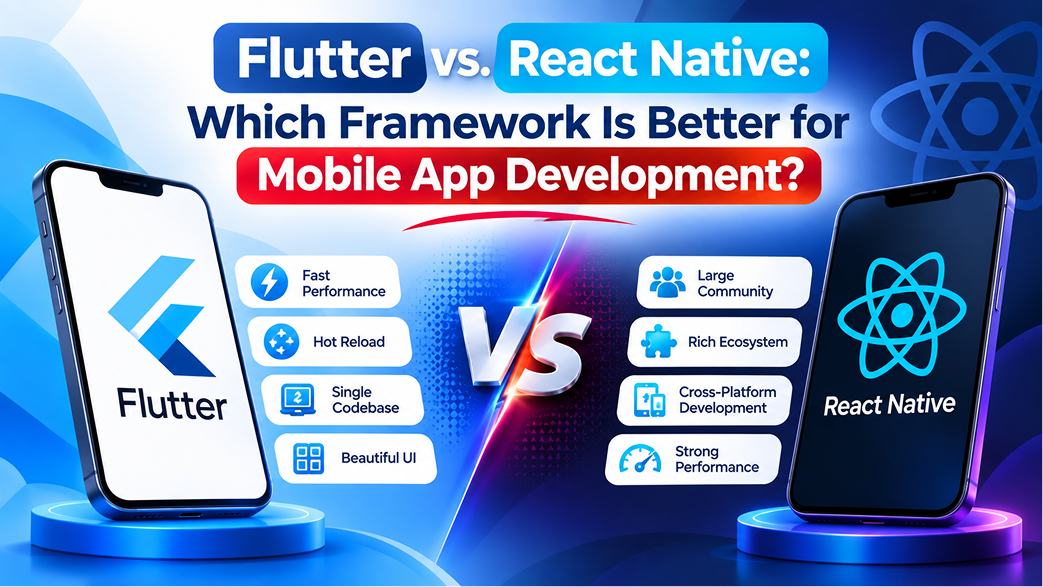
To understand the options further, read our comparison of Flutter vs. React Native for mobile app development.
3. Which Technologies and Tools Does Your Team Have Experience With?
The technology stack affects how an application is developed, integrated, maintained, and scaled. A development company should be able to explain the technologies it proposes and why they are suitable for your requirements.
Discuss its experience with:
- Programming languages: Kotlin, Swift, JavaScript, TypeScript, and other relevant languages.
- Mobile frameworks: Android development tools, iOS development tools, Flutter, React Native, and other suitable frameworks.
- Backend technologies: Server-side frameworks and services used to manage application logic.
- Databases: Database technologies appropriate for the application's data structure and usage.
- API development and integration: Connecting the application with external systems and services.
- Cloud and DevOps: Hosting, deployment, monitoring, and infrastructure management.
Also ask whether the team has experience with technologies required by your project, such as payment gateways, GPS tracking, push notifications, real-time communication, or third-party business systems.
Do not select a company simply because it uses a popular technology. The more important question is whether its technical choices fit your application.
4. Have You Developed Applications Similar to My Project?
Relevant project experience can help a development company understand your business workflows and potential technical challenges. Ask whether it has worked on applications with similar functionality, users, integrations, or operational requirements.
For example, if you are planning an online marketplace, the team should understand requirements such as:
- Multiple user roles and separate dashboards
- Product or service listings
- Search, filters, and discovery
- Booking, ordering, or transaction management
- Payment processing
- Notifications and communication
- Admin controls and reporting
Ask the company to share relevant portfolio examples, case studies, or demonstrations where it is authorised to do so.
While reviewing its experience, consider these points:
- What was the original business requirement?
- What responsibilities did the company handle?
- Which features and integrations were delivered?
- What technical challenges were addressed?
- Is the delivered application still maintained or in use, where this information can be shared?
A similar project does not guarantee that every requirement will be identical, but it can provide useful evidence of the team's practical experience.
5. What Is Your Development Process?
A clear development process helps businesses understand how their ideas will become a working application. It also establishes how requirements, design decisions, development work, testing, and feedback will be managed.
Ask the company to explain its development stages.
Requirement Discovery
The team studies the business objectives, target users, features, workflows, and technical requirements. This stage helps define the project scope.
UI/UX Design
Wireframes, user journeys, prototypes, and interface designs are prepared so that stakeholders can review the experience before full development.
Development
The application is built according to the agreed scope. This may include mobile interfaces, backend services, databases, APIs, and third-party integrations.
Testing and Quality Assurance
The team checks functionality, usability, performance, compatibility, security, and integrations before release.
Deployment and Support
The application is prepared for release on the selected platforms, and the agreed post-launch support process begins.
Also ask whether the company follows an Agile, iterative, or another delivery approach. More importantly, understand how frequently you will review progress and provide feedback.
6. How Long Will It Take to Complete My Mobile App?
Development timelines depend on the application's scope and complexity. A simple application with a limited number of workflows may require less effort than a multi-user platform with advanced integrations and complex backend operations.
Ask the development company:
- How will you estimate the project timeline?
- What are the major development milestones?
- How much time is allocated for design and testing?
- When will working versions be available for review?
- How will delays or changes in scope affect delivery?
Request a milestone-based project plan rather than relying only on a single estimated completion date.
A useful project plan should identify key deliverables, dependencies, review points, testing activities, and expected approval stages. This makes it easier to monitor progress and manage expectations.
7. How Do You Estimate the Total Development Cost?
Cost is an important factor, but the lowest quotation does not always represent the best value. A proposal should explain what is included in the estimate and what may require additional payment.
Ask for a breakdown covering:
- Requirement analysis and project planning
- UI/UX design
- Mobile application development
- Backend and database development
- Third-party integrations
- Testing and quality assurance
- Deployment and release preparation
- Maintenance and support
Also clarify whether the quotation includes infrastructure, hosting, external service subscriptions, app store-related charges, and future enhancements. These expenses may be separate from the development fee.
Before approving the proposal, understand the payment schedule, milestone approvals, change-request process, and any conditions that could affect the final cost.
8. How Do You Handle Changes in Requirements?
Business requirements can change during development. User feedback, market research, technical discoveries, and changing business priorities may lead to new features or adjustments to existing workflows.
A reliable development process should have a clear way to evaluate and manage these changes.
Ask:
- How can I request a change after development begins?
- Who evaluates the technical impact of a change?
- Will the change affect the timeline or budget?
- How are additional requirements documented and approved?
- Can features be prioritised for later releases?
Changes should be reviewed and agreed upon before implementation. This helps avoid misunderstandings and keeps the project scope transparent.
9. How Do You Ensure Application Quality and Security?
A mobile application may handle user accounts, personal information, payments, business records, or other important data. Quality and security should therefore be considered throughout development.
Ask the company about its approach to:
- Functional and usability testing
- Testing across supported devices and operating system versions
- Application performance and stability
- Secure authentication and access control
- Data storage and secure communication
- API and integration security
- Bug tracking and issue resolution
- Testing before production deployment
Also ask how testing results and unresolved issues will be communicated before launch. Depending on the application's purpose and the data it processes, additional security reviews or compliance assessments may be necessary.
A development company should be able to explain its actual quality assurance and security practices instead of making broad promises that an application will be completely error-free or risk-free.
10. Who Will Own the Source Code and Intellectual Property?
Ownership should be discussed before the project begins. Businesses need clarity on who owns the application, source code, designs, documentation, and other deliverables created during development.
Ask the company:
- Who will own the source code after the agreed payments are completed?
- Will the source code and required project files be handed over?
- Who owns the UI/UX designs and project-specific assets?
- Are any third-party libraries or licensed components being used?
- Are there restrictions on transferring or modifying the application?
- Will the ownership terms be included in the agreement?
The contract should clearly define intellectual property rights, ownership transfer conditions, third-party licensing obligations, confidentiality, and access to project assets.
Do not assume that paying for development automatically answers every ownership question. Make sure the agreed terms are documented.
11. How Do You Communicate and Share Project Updates?
Good communication helps keep the client and development team aligned. Without regular updates, businesses may find it difficult to understand project progress, identify blockers, or provide timely feedback.
Ask about the company's communication process:
- Who will be the primary point of contact?
- How frequently will progress updates be shared?
- Will there be scheduled review meetings?
- Which tools are used for task tracking and communication?
- How are technical questions and urgent issues handled?
- How will decisions and approvals be documented?
If you are working with a team in another location or time zone, also agree on suitable meeting times, response expectations, and shared working hours.
12. What Support Do You Provide After App Launch?
Launching the application is an important milestone, but it is not the end of the development lifecycle. Users may report bugs, operating systems may introduce changes, and third-party services may require updates.
Ask the company:
- Is post-launch technical support included?
- How long does the included support period last?
- What types of bugs or issues are covered?
- How are critical issues prioritised?
- Are maintenance and feature enhancements available separately?
- How are operating system and third-party API updates handled?
Also clarify the difference between warranty-related bug fixes, ongoing maintenance, and new feature development. These may be covered under different agreements.
A clear support arrangement helps businesses plan for the application's long-term stability and improvement.
How to Compare Mobile App Development Companies
After speaking with potential development partners, compare their responses using consistent evaluation criteria. This makes it easier to identify differences in technical capability, project approach, and commercial terms.
| Evaluation Area | What to Check |
|---|---|
| Technical expertise | Relevant platforms, frameworks, backend technologies, and integrations |
| Project experience | Relevant portfolio examples, case studies, and references |
| Development process | Requirement discovery, design, milestones, testing, and delivery |
| Communication | Project contact, progress reports, review meetings, and documentation |
| Pricing | Scope, payment terms, exclusions, and change-request costs |
| Quality and security | Testing approach, data protection, and issue management |
| Ownership | Source code, designs, documentation, and intellectual property terms |
| Post-launch support | Bug fixes, maintenance, updates, and support arrangements |
Do not evaluate a company based only on its quotation or presentation. Consider the clarity of its answers, the evidence it provides, and how well its proposed approach matches your project requirements.
How Vriksha Answers These Questions
We think every company you speak to should answer these questions openly, including us. Here are our short answers:
- Platforms and technology: Android and iOS apps (native, Flutter and React Native), with web admin panels and backends in Laravel, Node.js or Python.
- Similar projects: food delivery (Fudzo), car rental (OwnCarz), multi-brand ecommerce (Helios) and video streaming (One Time OTT). Our case studies show what each project involved.
- Cost: after a short discovery call we share an estimate broken down by app, panel and module, so you can see what each part costs and what can move to a later phase.
- Engagement models: a fixed-scope project, or a dedicated developer team that works as an extension of your own team.
- Experience: building software from Chennai since 2006, with 800+ clients and 1,200+ projects.
Warning Signs to Watch Out for When Hiring a Development Company
Along with asking the right questions, pay attention to answers or practices that may indicate potential project risks.
- Unrealistic delivery promises: Be cautious when a company promises a complex application without first understanding its requirements.
- Unclear quotations: A proposal that does not explain scope, deliverables, exclusions, or payment terms can create disputes later.
- No relevant project evidence: Be careful if a company cannot explain its experience or provide examples it is authorised to share.
- No defined testing process: Quality assurance should be planned rather than treated as an optional final activity.
- Vague ownership terms: Source code and intellectual property arrangements should be documented clearly.
- No post-launch plan: Understand how bugs, maintenance, and updates will be handled after release.
- Poor communication: Delayed responses and unclear explanations during the evaluation stage may create collaboration challenges later.
Conclusion
Hiring a custom mobile app development company is a decision that can influence your product's technical foundation, delivery experience, and long-term success. Asking the right questions helps you understand a company's capabilities, development process, project experience, pricing, security practices, and support arrangements before committing.
Want to put these questions to us? Book a free call and ask them all. Bring your idea or brief; we will answer each question for your project and follow up with a written first-version feature list and an itemised estimate. See our mobile app development services.
Ready to Build Your Next Digital Product?
Our experts will respond within 24 hours with a tailored approach for your project.